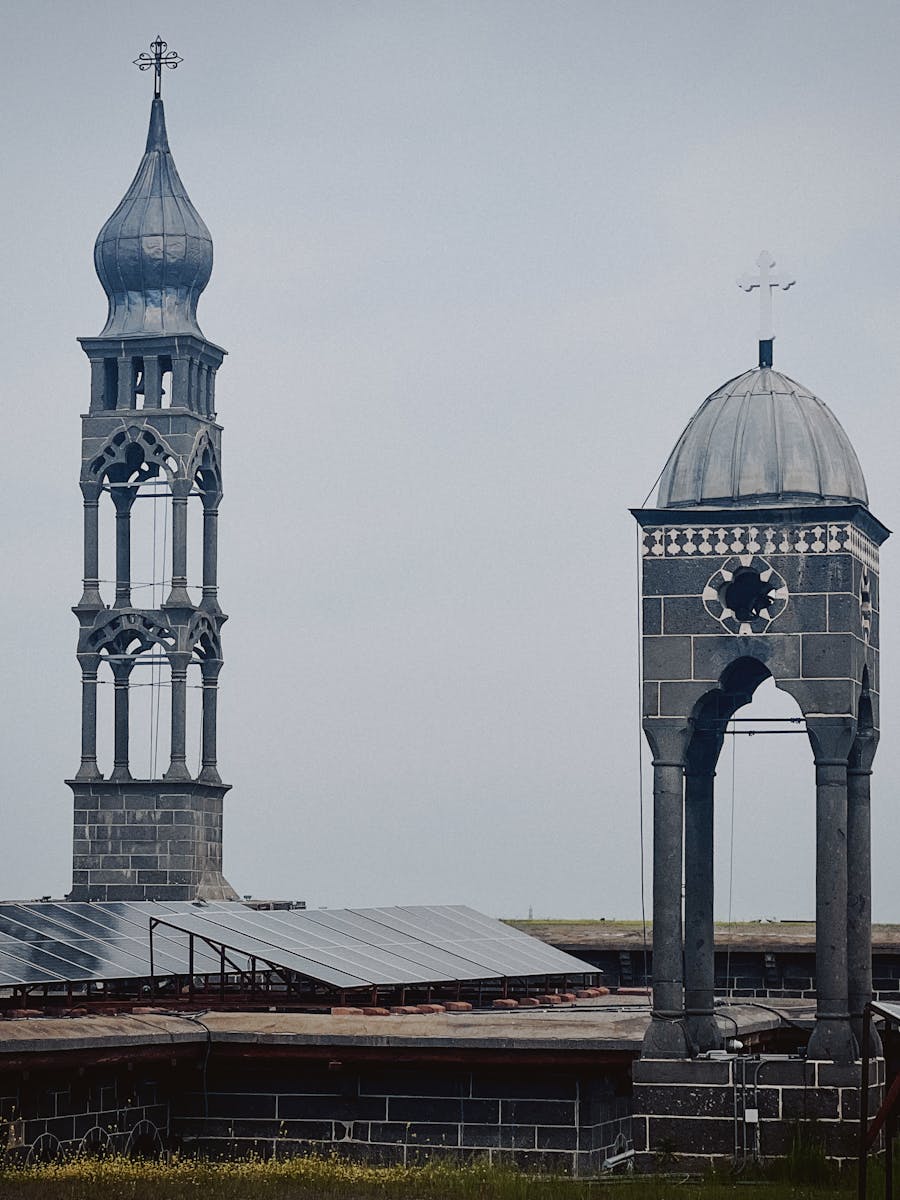
These are the questions we hear most from parish church officers approaching us for the first time. We've organised them by topic for easy navigation. If you have a question we haven't covered, please call us on or request a free feasibility.
Cost & funding
Frequently Asked Questions
How much do solar panels for a church cost in the UK?
Parish churches (8–40 kW): £10,000–£50,000. Cathedrals and large historic churches (30–200 kW): £40,000–£250,000. Church halls (10–80 kW): £12,000–£90,000. Cost per kW £1,000–£1,400 typical for sub-30 kW heritage installs (specialist work), falling to £900–£1,100/kW for 50 kW+ installs.
What grants are available for church solar?
Buildings for Mission (CofE national), diocesan Net Zero / Carbon Reduction programmes, Listed Places of Worship VAT grant scheme, National Lottery Heritage Fund (when part of wider conservation), Catholic diocesan trust funds, and various local foundation grants. Combined, capex can typically be reduced by 50–100% for parish-scale installs.
What is the Buildings for Mission grant and how do we apply?
Buildings for Mission is the Church of England's central grant programme for church building improvement projects, administered through the Church Buildings Council. Grants range from 5,000 to approximately 50,000 pounds for eligible projects, with solar PV strongly aligned with the programme's priorities. Approximately 25-30% of applications receive funding nationally. We write Buildings for Mission applications as part of our standard project service at no additional charge. Applications are accepted year-round with assessment panels meeting quarterly.
What is the Listed Places of Worship Grant Scheme?
The Listed Places of Worship (LPW) Grant Scheme, administered by DCMS, reimburses VAT on qualifying repairs and alterations to listed places of worship. Solar PV installation on a listed church qualifies. The reimbursement rate is 20% of the VAT-inclusive invoice. Applications are submitted within 12 months of the invoice date. For a 22,000-pound listed church install, the LPW grant typically returns 3,000-4,000 pounds.
Can Catholic churches get the same grants as CofE churches?
Most church solar grants are open to all denominations. The Listed Places of Worship VAT Grant Scheme covers all listed places of worship regardless of denomination. National Lottery Heritage Fund grants are available to listed Catholic churches. Catholic diocesan capital funds (Birmingham, Westminster, Salford, Liverpool, Clifton and others) provide grants or loans for parish sustainability projects. Buildings for Mission is CofE-specific; the equivalent Catholic programmes are diocesan capital funds and Caritas sustainability programmes.
What happens after the faculty is granted - how long until installation?
Once faculty is granted (typically 10-26 weeks after submission, depending on listing grade), the installation can proceed. Typical timeline from faculty grant to commissioning: detailed design and electrical engineering 2-3 weeks; DNO G98 or G99 notification/approval 2-8 weeks; materials procurement 2-4 weeks; installation 1-3 days for a 15-25 kW parish church system; commissioning and MCS certification 1 week. Total from faculty grant to energy generation: 6-15 weeks in most cases.
Faculty jurisdiction & permitting
Frequently Asked Questions
Can we install solar on a Grade I or Grade II* listed church?
Often yes, with faculty and Listed Building Consent. We've installed on Grade II Anglican parish churches and worked through faculty applications for Grade II* sites. Grade I and cathedrals require Cathedrals Fabric Commission (CFCE) involvement and Historic England consultation. Visual impact is minimised: black-on-black panels, less-visible slopes, sometimes outbuildings instead of the main church.
What is faculty jurisdiction and how does it affect us?
Faculty jurisdiction is the Church of England's permitting system for any works to consecrated buildings. Under the Care of Churches and Ecclesiastical Jurisdiction Measure 2018, solar PV on a CofE church requires a faculty granted by the Diocesan Chancellor, advised by the Diocesan Advisory Committee (DAC). We prepare the application — typically granted in 8–16 weeks.
Will solar panels affect our church's listed status or heritage?
No — Listed Building Consent confirms the works are acceptable. The listing remains. Most installs are designed to be reversible (no permanent structural change) so future generations can remove the panels if technology evolves. Historic England has published guidance supporting solar on listed places of worship.
Are there installers who specialise in heritage churches?
Yes — and you should insist on it. Ask for: previous faculty applications (with DAC reference), Historic England correspondence, EASA membership, MCS commercial certification, and references from church-warden or diocesan contacts. Avoid any installer who treats your project as just another commercial install.
What is the Buildings for Mission grant and how do we apply?
Buildings for Mission is the Church of England's central grant programme for church building improvement projects, administered through the Church Buildings Council. Grants range from 5,000 to approximately 50,000 pounds for eligible projects, with solar PV strongly aligned with the programme's priorities. Approximately 25-30% of applications receive funding nationally. We write Buildings for Mission applications as part of our standard project service at no additional charge. Applications are accepted year-round with assessment panels meeting quarterly.
What is the Listed Places of Worship Grant Scheme?
The Listed Places of Worship (LPW) Grant Scheme, administered by DCMS, reimburses VAT on qualifying repairs and alterations to listed places of worship. Solar PV installation on a listed church qualifies. The reimbursement rate is 20% of the VAT-inclusive invoice. Applications are submitted within 12 months of the invoice date. For a 22,000-pound listed church install, the LPW grant typically returns 3,000-4,000 pounds.
Technical & site
Frequently Asked Questions
How much do solar panels for a church cost in the UK?
Parish churches (8–40 kW): £10,000–£50,000. Cathedrals and large historic churches (30–200 kW): £40,000–£250,000. Church halls (10–80 kW): £12,000–£90,000. Cost per kW £1,000–£1,400 typical for sub-30 kW heritage installs (specialist work), falling to £900–£1,100/kW for 50 kW+ installs.
Can we install solar on a Grade I or Grade II* listed church?
Often yes, with faculty and Listed Building Consent. We've installed on Grade II Anglican parish churches and worked through faculty applications for Grade II* sites. Grade I and cathedrals require Cathedrals Fabric Commission (CFCE) involvement and Historic England consultation. Visual impact is minimised: black-on-black panels, less-visible slopes, sometimes outbuildings instead of the main church.
Will solar panels affect our church's listed status or heritage?
No — Listed Building Consent confirms the works are acceptable. The listing remains. Most installs are designed to be reversible (no permanent structural change) so future generations can remove the panels if technology evolves. Historic England has published guidance supporting solar on listed places of worship.
Should we install on the church itself or the hall?
The hall is usually the better starting point: higher utilisation, better self-consumption, simpler permitting (often unlisted), faster payback. Then add the church later as a Phase 2. Several dioceses recommend this 'hall first' approach explicitly.
What about the energy bills — most of our heating is oil or LPG, not electric.
Solar PV directly offsets electricity. If your heating is oil/LPG, solar primarily helps with lighting, sound system, kitchen, and any electric heating. The next question is whether to consider a heat pump alongside solar — increasingly common for parish energy strategies. We can model a combined heat pump + PV scheme as part of the feasibility study.
Are there installers who specialise in heritage churches?
Yes — and you should insist on it. Ask for: previous faculty applications (with DAC reference), Historic England correspondence, EASA membership, MCS commercial certification, and references from church-warden or diocesan contacts. Avoid any installer who treats your project as just another commercial install.
Strategy, mission & denominations
Frequently Asked Questions
Can we do this if we have a small congregation and tight finances?
Often yes — but with grant funding rather than capital. PCCs operating on deficits routinely deliver solar projects through Buildings for Mission and diocesan grants. We won't recommend solar where the numbers don't work — if your church is barely used and grants aren't available, we'll be honest.
Are there installers who specialise in heritage churches?
Yes — and you should insist on it. Ask for: previous faculty applications (with DAC reference), Historic England correspondence, EASA membership, MCS commercial certification, and references from church-warden or diocesan contacts. Avoid any installer who treats your project as just another commercial install.
What about the Church of England's net zero by 2030 commitment?
Solar is the single largest single-action contributor for most parishes. The CofE national strategy expects parishes to deliver between 30% and 60% of their electricity demand from on-site renewables by 2030. Many dioceses now require parishes to evidence their Net Zero pathway in annual reports.
Can we use solar panels as part of our mission outreach?
Yes — and many parishes do. 'Caring for God's creation' aligns directly with the project. Visible solar is a credible witness to environmental stewardship. Several parishes have run community open days featuring the install, school visits, and parish magazine articles. The CofE 'Eco Church' programme awards credits for renewable energy installations.
What is the Buildings for Mission grant and how do we apply?
Buildings for Mission is the Church of England's central grant programme for church building improvement projects, administered through the Church Buildings Council. Grants range from 5,000 to approximately 50,000 pounds for eligible projects, with solar PV strongly aligned with the programme's priorities. Approximately 25-30% of applications receive funding nationally. We write Buildings for Mission applications as part of our standard project service at no additional charge. Applications are accepted year-round with assessment panels meeting quarterly.
Can Catholic churches get the same grants as CofE churches?
Most church solar grants are open to all denominations. The Listed Places of Worship VAT Grant Scheme covers all listed places of worship regardless of denomination. National Lottery Heritage Fund grants are available to listed Catholic churches. Catholic diocesan capital funds (Birmingham, Westminster, Salford, Liverpool, Clifton and others) provide grants or loans for parish sustainability projects. Buildings for Mission is CofE-specific; the equivalent Catholic programmes are diocesan capital funds and Caritas sustainability programmes.
Other common questions
Frequently Asked Questions
How long does a church solar project take?
From PCC decision to commissioning: 6–14 months. Faculty/Listed Building Consent: 8–16 weeks. Grant applications: 4–12 weeks. Physical install: 1–4 weeks. DNO connection: 4–8 weeks for most parish-scale installs.
How does the Smart Export Guarantee (SEG) work for churches?
The Smart Export Guarantee (SEG) requires licensed energy suppliers to pay for electricity exported to the grid by small generators (up to 5 MW). Churches with solar PV can register under SEG through their electricity supplier. Typical SEG rates in 2026 are 5-15p per kWh exported. For a parish church generating 13,500 kWh/year and exporting 30% (4,050 kWh), SEG income at 10p/kWh is approximately 405 pounds per year.
What battery storage options are available for churches?
Battery storage allows churches to shift exported solar generation to evening or overnight use. Popular options include the Tesla Powerwall 3 (13.5 kWh), GivEnergy All-in-One (9.5 kWh), and SolaX battery systems. For a parish church, a 10-20 kWh battery typically adds 5,000-12,000 pounds to capex. The economics are most favourable for churches with significant weekday evening or Saturday use such as halls, food banks, and community lettings.
Do we need a structural survey before installing solar panels on our church?
Yes. The structural survey assesses whether the roof structure can bear the additional dead load of solar panels (typically 12-15 kg per square metre), whether any repairs are needed before installation, and whether in-roof or on-roof mounting is feasible. Most Victorian and older church roofs require a structural engineer sign-off for any solar installation, and many DACs will not grant a faculty without a structural engineer's report. This is included in our standard project scope.
Can we install solar panels on our church vicarage or rectory?
Yes. Vicarages and rectories are usually not listed, have straightforward roofs, and are domestic buildings with standard planning rules. Solar PV is Permitted Development on domestic properties under UK planning law with limited exceptions. Battery storage for vicarages is particularly cost-effective given the higher all-day occupancy. PCC governance and diocesan property officer consent may be needed if the diocese pays the energy bills.
How does solar PV fit with a church heat pump installation?
Solar PV and air source heat pumps are complementary technologies for churches pursuing net zero heating. The heat pump replaces oil or LPG heating with electricity; the solar panels offset the electricity consumption of the heat pump during daylight hours. A typical church heat pump consumes 20,000-50,000 kWh per year; a 20-30 kW solar array might offset 15,000-25,000 kWh of that. The combination of PV and heat pump is the standard pathway for CofE Net Zero 2030 compliance on most parish church buildings.
What maintenance does a church solar system require?
Solar PV systems on churches require minimal maintenance. Annual requirements: remote monitoring review; visual inspection from ground level; every 3-5 years a close physical inspection of fixings, cables, and inverter connections. In the UK climate, panels are typically self-cleaning from rainfall. Many parishes combine the annual solar inspection with the quinquennial electrical inspection. Inverter replacement is typically needed at year 12-15.
How do Methodist church trustees approve a solar installation?
Methodist churches are governed by Trustee bodies rather than PCCs. For a solar installation the process is: Local Trustees resolution approving the project in principle; Circuit Meeting approval (typically required for capital expenditure above 10,000-25,000 pounds depending on the Circuit); permission from the Methodist property body for larger projects; Listed Building Consent from the local planning authority if the building is listed (Methodist buildings have no ecclesiastical exemption). The Methodist Church Net Zero programme is the primary grant route.
Can we claim solar panels on our church insurance?
Most church insurance policies (Ecclesiastical, Ansvar, NFU Mutual and others) cover solar panels as part of the building once notified. You must inform your insurer before installation. The premium uplift is typically small (30-150 pounds per year for a parish-scale system) and is more than covered by the energy savings. We provide all technical documentation (MCS certificate, inverter datasheets, electrical certificate) for insurance purposes as part of our project handover pack.
What is a community energy model and can churches use it?
Community energy allows a group of people (congregation members, local community) to collectively own or finance a renewable energy asset. For churches, this might mean congregation members investing in the solar system in return for a fixed return; a local community benefit society owning the panels and the church paying a lease; or a cooperative group buy scheme. Community energy models can reduce the upfront capital required from the PCC significantly - in some cases to zero.
What is the Church of England's net zero 2030 target and how does solar help?
The Church of England committed in 2020 to reaching net zero carbon by 2030, covering all energy use across approximately 16,000 parish churches, 4,700 church schools, cathedrals, and diocesan offices. Solar PV is the fastest-deployable and most cost-effective decarbonisation tool for most parish churches and halls. Most diocesan Net Zero programmes now require a parish to have completed a solar feasibility assessment as part of their net zero pathway planning.
Can we install solar panels on our church hall without a faculty?
A faculty is required for solar panels on a church hall if the hall is within the consecrated curtilage of the church, or if the hall is on the same site as the consecrated church and covered by the same faculty jurisdiction. For many parish church-and-hall complexes, the hall is within the faculty jurisdiction even if it was built more recently and is unlisted. Check with your diocesan registrar if unsure. For separately located halls not adjacent to the consecrated church, faculty may not be required.
How much south-facing roof area do we need for a viable solar installation?
As a rule of thumb, 1 kW of solar capacity requires approximately 5-6 square metres of south-facing roof space (using 400-420W panels). A viable parish church installation typically needs at least 30 square metres of usable south-facing slope (yielding around 5-6 kW minimum). Most viable parish church installations fall in the 50-150 square metre range (10-30 kW). East-west slopes can be used but generate around 80% and 65% of south-facing output respectively. Our feasibility assessment includes a satellite analysis of your roof before we visit.
What is a Power Purchase Agreement (PPA) for churches?
A Power Purchase Agreement (PPA) allows a church to access solar electricity with zero upfront capital cost. A third-party investor funds and owns the solar installation; the church agrees to purchase the electricity generated at a pre-agreed rate below the grid rate for a fixed term (usually 10-25 years). PPAs work best for larger systems (30 kW plus) with high and consistent electricity consumption - halls with significant weekday lettings, cathedral visitor centres, and church school sites.
What is the Allchurches Trust and can we get a grant from them?
The Allchurches Trust is a charitable trust associated with Ecclesiastical Insurance Group. It makes grants to churches and charities across the UK and Republic of Ireland. For church buildings, grants can support conservation and sustainability projects including solar PV, particularly for rural or small parish churches with limited fundraising capacity. Grant sizes range from a few thousand pounds to 50,000 pounds plus for significant projects. Applications are open year-round.
Do solar panels reduce the value of our church building?
Church buildings held in a parish trust are not valued commercially in the way private residential or commercial buildings are. The relevant consideration for a PCC is heritage impact (does the installation harm the significance of the building?) and mission impact (does it serve the parish's ministry?). A well-designed heritage solar installation does not harm the significance of a well-designed church building - this is the position of most DACs and is supported by Historic England's published guidance.
Still have questions?
If your question isn't answered here, the best next step is a brief phone call. Most PCC enquiries take 10–15 minutes on the phone to understand whether solar makes sense for your church and what the right pathway is. There's no charge for the conversation and no obligation to take it further.
Alternatively, you can request a free desk feasibility — we'll send a PCC-ready report within 7 working days based on your electricity bills and a few roof photos.