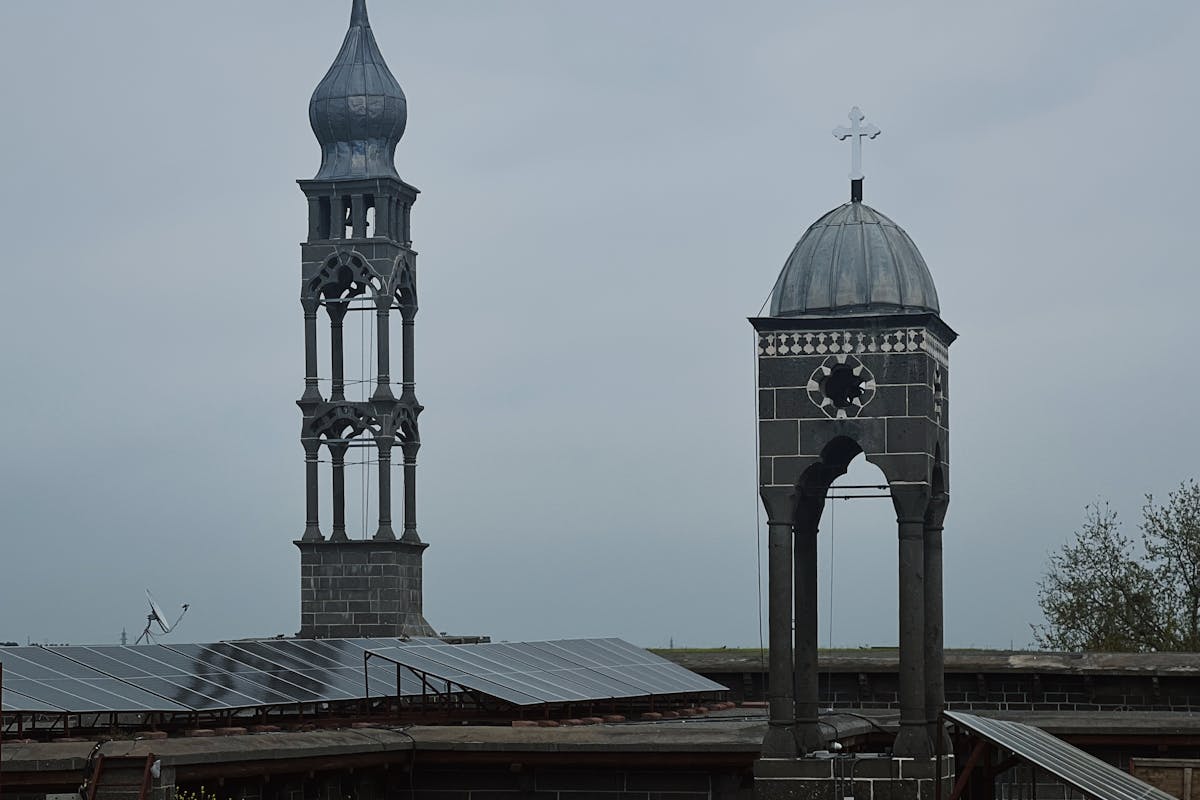
Quick answer — PCC solar panels UK 2026
A typical 15 kW parish church solar system costs £18,000–£24,000 turnkey, and for most parishes that carries 0% VAT until 31 March 2027 under the energy-saving materials relief for charitable-use buildings. Where a Buildings for Mission award lands at the typical 50–70% of capex, the PCC funds the remaining 30–50%, and diocesan capital programmes can reduce that further. Faculty jurisdiction (CofE) adds 10–26 weeks depending on listing grade. The Listed Places of Worship VAT scheme closed on 31 March 2026, so remove any VAT rebate line from an older funding stack.
Request a free PCC feasibility report →1. The case for parish solar in 2026
Three forces converge in 2026 to make parish solar the single most-asked-about energy intervention in UK churches. First, energy bills: most parishes are now spending £3,000–£18,000 a year on electricity and gas combined. After the 2022–24 wholesale gas price spike, energy is now the second or third largest line item on the average PCC budget. Solar PV directly offsets electricity at retail (22p/kWh) and produces additional SEG export income.
Second, the Church of England's national net zero by 2030 commitment, made in 2020 General Synod, flows down to every diocese with carbon reporting now embedded in the annual parish return. For most parishes, solar PV is the single largest single-action contributor to that trajectory. Methodist, URC and Catholic equivalents are running similar 2030 commitments.
Third, the grant landscape keeps moving, and in 2026 it moved against listed places of worship: the Listed Places of Worship VAT Grant Scheme closed on 31 March 2026 with no further rounds. What remains for parish solar is Buildings for Mission (CofE national), the Demonstrator Churches Project, diocesan capital programmes (Oxford up to £40k, Bristol, Manchester, Salisbury, Lichfield), the Methodist Church Net Zero programme, the National Lottery Heritage Fund and local foundation grants — plus the 0% VAT rate on the installation itself, which needs no application and runs to 31 March 2027. Check what is open on the day you apply rather than working from a list in a guide, including this one.
2. Who in the PCC needs to be involved
Parish solar is fundamentally a PCC-led project. The PCC is the legal authorising body for any works to consecrated CofE buildings and the principal decision-maker for non-CofE buildings via equivalent trustee structures. Five PCC roles matter most:
- Vicar/incumbent or minister — chairs PCC, gives spiritual leadership to the case, makes the mission framing
- Churchwarden(s) — typically the project sponsor; signs the faculty petition; main on-site contact for the survey and install
- Treasurer — manages cashflow, grant accounting, Gift Aid implications, and checks the installer is applying the 0% VAT rate the building qualifies for
- PCC secretary — minutes the resolutions, maintains the project record
- Environment champion or Eco Church lead (where appointed) — supports the mission framing, runs congregational engagement
For a smooth project the vicar and treasurer need to be aligned. Where they aren't, projects stall. We are happy to attend PCC meetings (by phone or in person) to brief any of these roles directly.
3. What it costs (and what you actually pay)
Headline capex for a typical parish church solar PV installation in 2026:
- 10 kW system: £12,000–£16,000 turnkey
- 15 kW system: £18,000–£24,000
- 20 kW system: £22,000–£30,000
- 30 kW system: £32,000–£42,000
- 40 kW system: £42,000–£55,000
Heritage premium for listed parish churches: 15–30% above commercial standard, reflecting bespoke fixings, smaller crane and access logistics, more careful protection of fragile fabric, and longer permitting absorbing more project management cost.
The headline number is rarely what the PCC actually pays, but be careful which reductions you count. The installation should carry 0% VAT until 31 March 2027, and a Buildings for Mission award typically covers 50–70% of capex where it is won — while the Listed Places of Worship VAT scheme that older guides put in this stack closed on 31 March 2026. See our full cost guide for the arithmetic with the assumptions shown.
4. Where the money comes from
A typical funding stack for a £25,000 listed parish church install:
- Buildings for Mission grant — £14,000 (covers 56% of capex)
- 0% VAT on the installation — no VAT to fund, and no claim to make, until 31 March 2027
- Parish reserves — £3,000
- Gift Aid donations / parish appeal — £2,500
- Allchurches Trust grant — £1,500
Net cost to parish: zero (or close to it). Lifetime electricity savings: £75,000–£100,000 over 25 years.
See our complete grants guide for the ten major UK church solar funding routes and how to combine them.
5. Faculty jurisdiction explained
For CofE parishes, any works to a consecrated building require a faculty granted by the Diocesan Chancellor on the advice of the Diocesan Advisory Committee (DAC). The legal basis is the Care of Churches and Ecclesiastical Jurisdiction Measure 2018. Solar PV is now a well-trodden category of application: most CofE dioceses have approved a dozen or more solar faculties since 2020.
Application stages:
- PCC resolution — formal vote authorising the application
- Statement of Significance — heritage analysis of the building (800–1,500 words)
- Statement of Needs — case for the works (600–1,200 words)
- Detailed proposal — drawings, fixings, conservation impact assessment
- DAC consultation — DAC issues Notification of Advice (Recommended, Recommended with conditions, No objection, Objection)
- Public notice — 28-day petition window
- Chancellor's grant — formal faculty document issued
Typical timescale: 10–18 weeks for Grade II buildings, 18–26 weeks for Grade II*, 24–40 weeks for Grade I. See our faculty application service page and 2026 PCC guide to faculty for the full process.
6. If your church is listed
Most parish churches in England and Wales are listed (Grade I, II* or II). Two consenting regimes apply in parallel: faculty jurisdiction (above) and Listed Building Consent (LBC) under the Planning (Listed Buildings and Conservation Areas) Act 1990. We manage both.
Three things make listed-church solar achievable in 2026:
- Black-on-black panels — visually much less intrusive than 2010s blue-cell silver-frame
- In-roof flush mounting — panels sit at slate-line, eliminating standoff appearance
- Less-visible slope selection — chancel south slope often preferred over nave south slope
Historic England has published Energy Efficiency and Historic Buildings: Solar Electric (Photovoltaic) Panels — the reference standard. See our heritage design blog post for full detail.
Is your church listed or in a conservation area?
Listed church solar is our specialism. We've prepared 40+ successful faculty applications across 15+ CofE dioceses — including Grade I buildings where Historic England was a statutory consultee. The process takes longer, but the outcome is the same: panels installed, grants claimed, bills cut.
Start with a free listed-church feasibility →7. How denomination matters
- Church of England — faculty jurisdiction; Buildings for Mission funding; diocesan Net Zero programmes; PCC governance. See parish churches.
- Catholic — diocesan trust as legal owner; finance committee approval (3–6 months); Laudato Si' framework; Catholic parishes.
- Methodist — no faculty needed; circuit trust holds property; Methodist Net Zero programme funding; free churches.
- URC, Baptist, free-church — trustee approval; civil planning if listed; free churches.
- Church in Wales — separate faculty system under the Constitution of the Church in Wales.
- Cathedrals — Care of Cathedrals Measure 2011; CFCE for nationally significant works; cathedrals.
8. The seven-stage project pathway
- Free desk feasibility (Week 1)
- PCC meeting and resolution (Weeks 2–4)
- On-site survey and detailed proposal (Weeks 3–6)
- Faculty and Listed Building Consent (Weeks 6–22)
- Grant applications (Weeks 6–22, parallel)
- DNO and contract (Weeks 18–26)
- Install, commission and Eco Church (Months 6–14)
See our full process page for the detailed stage-by-stage breakdown.
9. Framing it as mission
For most parishes, the strongest single decision in the whole project is the mission framing. Solar PV is not just a capital project; it is a credible witness to creation care, stewardship, and the parish's commitment to its wider community. The framing matters at three points:
- PCC decision — the financial case alone often does not win an undecided PCC. The mission case is what shifts the room.
- Grant applications — Buildings for Mission specifically asks for the mission narrative. Diocesan capital programmes weight it heavily. Charitable trusts almost always require it.
- Congregational engagement — the parish magazine feature, the Sunday notices, the open day. The mission framing is what makes the project legible to parishioners who don't read PCC minutes.
"Caring for God's creation" (Genesis 2:15), "you shall love your neighbour as yourself" (Matthew 22:39), Pope Francis's Laudato Si' for Catholic parishes, the Methodist Church's "Action for Hope" framework — the theological resources are deep and substantive.
10. Red flags to watch for
Things that should make a PCC pause before signing:
⚠ PCC due-diligence checklist
- ✗Installer hasn't written a CofE faculty application before — generalist commercial installers usually produce applications the DAC sends back for redrafting, adding 8–16 weeks
- ✗Quote not fixed-price — beware open-ended "variation" clauses that can double the capex mid-project
- ✗No MCS certification — MCS certification of the installer is what lets you register for the Smart Export Guarantee, and grant programmes commonly ask for it. Check the installer’s certificate yourself on the MCS register rather than taking a logo on a van at face value
- ✗Pressure to sign before faculty and grants are confirmed — reputable installers wait for these; pressure means they've overextended their pipeline
- ✗Payback under 4 years on a Sunday-only church — a 40 kWh/week church won't generate savings that fast; these figures are fabricated
- ✗No engagement with the diocesan architect — pre-application contact is expected by most DACs; skipping it causes formal objections
- ✗No reversibility plan in the proposal — both Historic England and DACs expect a credible reversibility narrative for Grade II+ buildings
- ✗No insurance-backed warranty — leaves the PCC exposed if the installer ceases trading during or after the project
The strongest single quality test: ask the installer to provide a reference contact from a completed install in the same diocese. A specialist says yes immediately. A generalist doesn't have one.
11. Next steps for your parish
- Gather twelve months of electricity bills and a few roof photos
- Identify your Diocesan Net Zero Officer (CofE) or equivalent
- Confirm listing grade (Historic England's National Heritage List — free at historicengland.org.uk)
- Read the most recent quinquennial report (CofE) for roof condition
- Have an initial PCC discussion to authorise a desk feasibility
- Request a free desk feasibility — we'll respond within one working day
Related resources
How we manage the CofE faculty process end-to-end Grants & funding guide
Demonstrator Churches, Buildings for Mission and diocesan capital, with what closed in 2026 Specialist vs generalist comparison
Why heritage church solar needs a specialist installer Battery storage for churches
When batteries make sense alongside solar PV Heat pumps for churches
Combining solar with heating decarbonisation Wales: Church in Wales guidance
CBC consent routes and CinW DAC process Scotland: SEC and Kirk guidance
Scottish Episcopal Church and Church of Scotland routes PCC reviews
What parish councils and trustees say about our projects