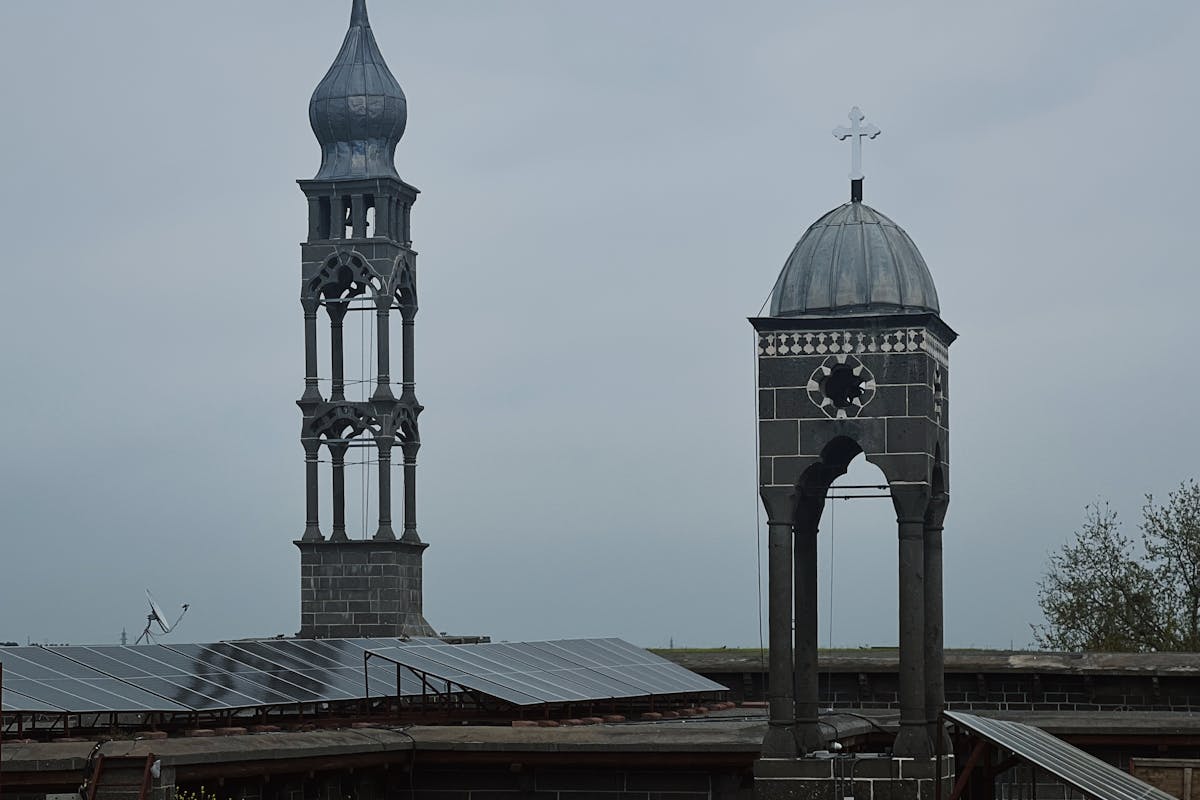
Quick answer — solar panels for churches grants 2026
The main grants for solar panels for churches in 2026 are the Demonstrator Churches Project (up to £50,000), Benefact Trust (up to £36,000), Buildings for Mission (£10,000–£50,000), and diocesan Net Zero capital programmes (the Listed Places of Worship VAT scheme closed on 31 March 2026 and can no longer be counted on). Stacked correctly, these typically cover 50–100% of a parish solar project's cost. We write every application as part of the project.
Get your parish funding map free →The UK church solar funding landscape in 2026
Solar PV for UK churches and parish buildings is one of the best-funded categories of capital project available to PCCs and trustees. Twelve major funding routes operate at national and denominational level, augmented by dozens of diocesan programmes, charitable trusts, and heritage-specific grants. For an awarded parish project the combined funding cover typically reaches 50–100% of capex — meaning the PCC's net cost can be a fraction of the headline figure.
The challenge is not whether funding exists. The challenge is matching the right scheme to the right parish, writing the application to a competitive standard, and meeting the often-strict deadlines and reporting requirements. We include grant application writing in every church solar project we deliver — not as a chargeable extra, but as a standard part of how we work with parishes.
⚡ The three biggest grants for UK church solar in 2026
- Demonstrator Churches Project — up to £50,000 per church, Church Commissioners fund, 114 churches supported in 2024–25
- Benefact Trust — up to £36,000 per project, Ecclesiastical Insurance charity arm, church energy focus
- Buildings for Mission — typically £10,000–£50,000, CofE national programme, requires diocesan support letter
1. Demonstrator Churches Project (Church Commissioners)
The Demonstrator Churches Project is the single largest dedicated fund for parish solar in England. Administered by the Church Commissioners (the national body managing the Church of England's endowment), the programme was allocated £5.2 million in 2024–25 supporting 114 parishes with energy efficiency and renewable energy installations.
Award size: Up to £50,000 per church project. Most awards in the £15,000–£40,000 range for solar PV. Awards can be combined with Buildings for Mission and diocesan capital grants.
Eligibility: Church of England parish churches and halls. Applications are routed through diocesan net zero officers, not submitted directly. The key eligibility test is that the project is designed to deliver measurable energy and carbon reduction, and the building has a credible ongoing use.
What makes a strong application: A detailed energy baseline (meter data), a clear modelled output showing kWh reduction and CO₂ saving, faculty consent either granted or in progress, and a letter of support from the diocesan net zero officer. We prepare all technical elements as part of our standard project process.
Application route: Contact your Diocesan Net Zero Officer to confirm the current funding window and application requirements. The Demonstrator Churches programme runs on an annual basis with applications assessed centrally.
2. Benefact Trust (Ecclesiastical Insurance)
The Benefact Trust is the charitable arm of Ecclesiastical Insurance Group — the specialist insurer for UK churches. The Trust has committed over £1.5 million to church energy efficiency and renewable energy projects and operates a dedicated application route for church solar PV projects.
Award size: Typically up to £36,000 per project for solar PV installations on church buildings. The Benefact Trust focuses specifically on reducing energy costs for church communities and has a particular interest in parishes with above-average energy bills and demonstrable community benefit.
Eligibility: UK churches and places of worship of any denomination, including Church of England, Roman Catholic, Methodist, Baptist, URC and independent. Not restricted to listed buildings. The building must be an active place of worship with demonstrable community benefit.
What makes a strong application: Current electricity bills, a clear technical proposal, and evidence of community benefit beyond Sunday services (weekday hall use, community events, food banks etc.). The Trust responds well to proposals that demonstrate financial hardship reduced by the solar saving.
Benefact Trust — application details
3. Buildings for Mission (Church of England)
The Church of England's national Buildings for Mission programme is the principal funding route for CofE parish solar in 2026. Run nationally with input from each diocese, the programme supports energy efficiency, renewable energy, and broader mission-aligned building improvements. Typical awards £10,000–£50,000 per parish, with some larger awards in special cases. Approximately 30% of applications receive funding nationally; success rates vary by diocese.
Eligibility: Church of England parish churches (and in some cases parish halls in curtilage). The PCC must demonstrate alignment with the diocesan Net Zero plan, present a clear case for the works, and meet the diocesan and national fund priorities.
Application route: via your Diocesan Net Zero Officer or buildings team. We draft the technical and financial sections; the parish provides the mission and stewardship narrative. We've drafted over forty successful Buildings for Mission applications.
Typical decision timescale: 6–14 weeks from submission. Funding rounds open at intervals determined by the diocese.
Buildings for Mission programme details (Church of England website)
4. Diocesan Net Zero Capital Programmes
In addition to the national Buildings for Mission, most CofE dioceses now run their own diocesan Net Zero or Carbon Reduction capital programmes. The strongest are:
- Diocese of Oxford — sector-leading, parish solar grants up to £40,000. The Oxford diocese has committed to net zero by 2035 and made very substantial capital available for parish renewables.
- Diocese of Bristol — Bristol has been at the front of parish solar since 2021 with dedicated programme funding.
- Diocese of Manchester — Net Zero Capital Fund with active grant rounds.
- Diocese of Salisbury — pioneer of diocesan parish energy strategy with substantial capital programme.
- Diocese of Lichfield — covering Staffordshire and the Black Country; active Carbon Grants programme.
- Diocese of Leeds — Parish Carbon Reduction Grants.
- Diocese of London — London Diocesan Fund 2030 Net Zero Strategy.
Most other dioceses have either a programme in development or specific occasional capital. We'll identify the right diocesan route for your parish as part of the initial feasibility.
5. Listed Places of Worship Grant Scheme (CLOSED 31 March 2026)
This scheme is closed. DCMS confirmed on 31 March 2026 that the Listed Places of Worship Grant Scheme is no longer accepting applications from new or returning applicants, that all awards within the £23 million 2025–26 budget were finalised, and that there will be no further funding rounds. Any outstanding decisions were issued by 15 April 2026. It previously reimbursed VAT on qualifying works to listed places of worship, so parishes budgeting from older guidance should remove it from their funding stack.
What replaced it (England): the Places of Worship Renewal Fund, funded by DCMS and delivered by Historic England, with £92 million allocated over four years. Be aware that it is aimed at repair and maintenance of buildings most at need, and its published criteria do not mention energy efficiency, decarbonisation or solar — so do not assume a solar project is eligible.
UK-wide alternative: the National Lottery Heritage Fund remains open to places of worship across the UK for heritage projects.
VAT note: the installation of solar PV currently attracts 0% VAT in qualifying cases until 31 March 2027, after which it is due to revert to 5%. Where the zero rate applies there is no 20% VAT to reclaim, so a VAT-rebate line should not be counted twice in a funding stack.
GOV.UK: the Listed Places of Worship Grant Scheme is closed
Not sure which grants your church qualifies for?
We map every available scheme to your parish as standard — no charge. Request a free funding feasibility and get your personalised grant route map within 7 working days.
Get my free funding map →6. National Lottery Heritage Fund
The National Lottery Heritage Fund is rarely the right route for solar PV alone, but for parishes pursuing a wider conservation or heritage-led project (re-roofing, re-leading, organ restoration, fabric repair, community engagement programme) where solar is one component, the Heritage Fund is the major UK route. Award sizes range from £10,000 to £250,000+.
Eligibility: Heritage-led projects with public benefit. Listed buildings have a natural advantage. Strong community engagement, learning programmes, and access components strengthen applications.
Application: a substantial undertaking. We typically partner with a specialist Heritage Fund consultant for the wider application; we provide the solar/energy component.
National Lottery Heritage Fund
7. Catholic Diocesan and Religious Order Funds
The Catholic Church in England and Wales operates funding differently from the CofE. There is no national equivalent to Buildings for Mission; instead each diocese holds its own capital funds and finance committees. The most active dioceses for parish solar capital funding in 2026:
- Archdiocese of Birmingham
- Diocese of Westminster (London area)
- Diocese of Salford (Greater Manchester)
- Archdiocese of Liverpool
- Diocese of Nottingham (East Midlands)
- Diocese of Plymouth (South West)
Many Catholic dioceses now operate a Laudato Si' Action Plan with associated parish grant streams. The framework is rooted in Pope Francis's 2015 encyclical and provides a strong theological case for parish solar.
Catholic Bishops' Conference of England and Wales
8. Methodist Church Net Zero programme
The Methodist Conference adopted a net zero by 2030 target in 2021, ahead of the CofE's national commitment. The Methodist Church operates a dedicated Net Zero Carbon programme with capital funding for parish solar, heat pump and insulation projects, an approved supplier panel for major works, and annual carbon reporting by circuit and district.
Award rates have been strong for Methodist solar projects, particularly buildings with active community use. We've delivered Methodist installations where the Net Zero programme covered 60–80% of capex.
9. Charitable Trust Funding
UK charitable trusts that regularly support church and faith-building capital projects include:
- Allchurches Trust — significant CofE-aligned grant maker, typically £1,000–£25,000 awards for parish projects.
- Garfield Weston Foundation — supports churches alongside many other community causes.
- Tudor Trust — community-organisation focus including church-based projects.
- Local foundation grants — most counties have local foundation grants in the £1,000–£10,000 range.
- Quinquennial Restoration funds — some dioceses pool quinquennial findings into capital programmes.
10. Specialist heritage grants
Smaller specialist heritage grant programmes occasionally fund church solar:
- Pilgrim Trust — heritage and historic environment grants.
- Architectural Heritage Fund — primarily for buildings at risk, but church solar within a wider heritage project can qualify.
- Wolfson Foundation — major awards for nationally significant heritage projects.
11. Local council and regional funding
Some local authorities and combined authorities operate community-sector capital programmes that can include church projects:
- Greater Manchester Combined Authority — Local Net Zero Hub support
- West Yorkshire Combined Authority — Net Zero Toolkit
- West of England Combined Authority (Bristol) — business and community decarbonisation grants
- Liverpool City Region Combined Authority — Net Zero Innovation Fund
- Welsh Government — Net Zero Public Sector and Welsh Government Energy Service
- Scottish Government — community climate and renewables programmes
Council ward-member grants (typically £500–£5,000) and parish council Section 137 grants can also contribute to small church projects.
12. Combining the funding stack
The most cost-effective UK church solar projects combine multiple funding sources. A typical funding stack for a £25,000 listed parish church install:
- Buildings for Mission grant — £14,000 (56% of capex)
- Listed Places of Worship VAT reimbursement — £4,167 (the VAT portion)
- Parish reserves — £3,000
- Parish fundraising / Gift Aid donations — £2,500
- Allchurches Trust grant — £1,500
Net cost to parish: zero (or close to it). Lifetime electricity savings: £75,000–£100,000 over 25 years. The case writes itself.
Quick reference: grants we typically apply for
Buildings for Mission (Church of England)
Value: £10,000–£50,000 typical. Up to 100% of project cost in some cases.
Eligibility: CofE parish churches. Funds energy efficiency, renewable, and mission-related building improvements.
Run nationally with input from dioceses. Application via diocesan Net Zero Officer or buildings team.
Diocesan Net Zero / Carbon Reduction Programmes
Value: £5,000–£40,000 typical.
Eligibility: Vary by diocese. Most CofE dioceses (Oxford, Salisbury, Manchester, Lichfield, Liverpool, etc.) run capital programmes for parish renewables.
Diocesan Net Zero Officers (or equivalents) are the main contact. Quality of stewardship case matters as much as technical case.
Catholic Diocesan Trust / Heritage Funds
Value: Varies by diocese — typically £5,000–£30,000.
Eligibility: Catholic dioceses operate their own internal capital funds for parish improvements. Several have dedicated 'Caring for our Common Home' (Laudato Si') programmes.
Catholic Bishops' Conference of England and Wales has central guidance; diocesan finance committees control the money.
National Lottery Heritage Fund
Value: £10,000–£250,000+.
Eligibility: Heritage-led projects with public benefit. Solar can be a component of a wider conservation scheme.
Solar alone rarely funded — but as part of a wider 'sustainable heritage' application, often successful.
Listed Places of Worship Grant Scheme (VAT)
Value: Reimburses VAT (currently 20%) on qualifying expenditure.
Eligibility: Listed places of worship. Grants reimburse VAT on eligible building works.
Solar PV on listed places of worship typically qualifies. Apply within 12 months of invoice. Effectively a 20% discount on capex.
How we handle the grant work
Our standard approach for every UK church solar project:
- Identify all eligible routes at initial feasibility — typically 3–5 schemes per project
- Draft the applications — we write the technical and financial sections; the parish provides mission, stewardship and community narrative
- Manage submission timing — funding rounds have deadlines, often quarterly or bi-annual
- Support post-award reporting — most grants require completion reports, photos, and financial reconciliation. We provide everything.
- Handle the VAT claim — Listed Places of Worship Grant Scheme applications are made by us on the parish's behalf after invoicing
All of this is included in our standard project fee — not billed separately. We do not take a percentage of grants awarded; we simply include grant writing as a non-negotiable part of doing church work properly.
Further reading
- 2026 Buildings for Mission grant guide — full application process, eligibility and timescales
- Listed church solar heritage design — how heritage requirements affect grant stack eligibility
- Grant writing service — our included grant writing and post-award reporting process
- PCC solar handbook — governance section covers how to present grant funding to a PCC vote
13. Before you apply: who is going to own the system
Every scheme on this page funds an asset the applicant will own. That single condition rules out two of the three ways churches commonly finance solar, and it is much easier to settle before an application than after an award letter.
A third-party-owned PPA usually disqualifies you. Under a power purchase agreement the developer owns the panels and sells you the electricity, so the parish is buying energy rather than acquiring an asset. Where a funder requires ownership, that is not a technicality it will waive. If a PPA is the right answer for your building — and for a church with no reserves and a large roof it sometimes is — treat it as an alternative to the grant route rather than a complement to it. Our guide to church power purchase agreements sets out the trade-offs.
A roof lease to a community energy society is a disposition of charity land. This is the one that surprises PCCs and hall committees, because it feels like a partnership rather than a property transaction. For charities in England and Wales, section 117 of the Charities Act 2011 means such a lease cannot proceed without an order of the court or the Charity Commission unless the trustees follow the statutory route, and that route has two conditions. First, the society taking the lease must not be a connected person under section 118 — which includes the charity's trustees, their close family, its officers and employees, and any body those people control or hold a substantial interest in. Village hall committees and local energy groups frequently share members, and where they do the statutory route is closed and a Commission order is needed. Find that out before heads of terms are drafted. Second, the trustees must obtain and consider written advice: under section 119 for a lease of more than seven years, which is what a solar array's working life implies, and under the lighter section 120 for a lease of seven years or less.
One point to correct if you are working from older guidance: the adviser no longer has to be a chartered surveyor. The Charities Act 2022 replaced the old "qualified surveyor" test with a designated adviser, so fellows of the Central Association of Agricultural Valuers and fellows of NAEA Propertymark can advise, and a suitably qualified trustee or employee of the charity can now give the advice in-house. The same Act removed the requirement to advertise the disposition as the adviser directed. Scotland and Northern Ireland run their own charity land regimes, so do not apply these sections outside England and Wales. The charity solar rules guide works through the sequence in full, and the trustee checklist for a roof lease covers the connected-person test and the lease clauses in order.
And get the VAT right before you decide what to ask for. Since 1 February 2024 the installation has been zero-rated for VAT in a building used solely for a relevant charitable purpose, and that relief runs to 31 March 2027. An application built on a VAT-inclusive quote asks a funder for money the parish will never have to spend, which both overstates the ask and invites an awkward question at assessment. Establish the rate first, apply for the grant against the VAT-free figure, and make sure no funding stack shows both a 0% rate and a VAT rebate — the closed Listed Places of Worship scheme is still in a great many church funding templates. Our VAT guide covers the two tests the building has to meet, and the 31 March 2027 deadline is worth reading before you decide which funding round to aim for.
Church solar grants by denomination
Not every scheme is open to every church, and a great deal of wasted effort comes from parishes applying to funds they were never eligible for. The Church of England's national programmes — Buildings for Mission and the Demonstrator Churches Project — are restricted to CofE parishes. The Methodist and Catholic routes are denominational. But three of the most valuable routes are open to any active place of worship regardless of tradition: the Benefact Trust, the Listed Places of Worship VAT scheme, and heritage and charitable trusts. The table below shows which doors are open to each denomination before you spend a single evening on an application.
| Denomination | CofE national (BfM + Demonstrator) | Own diocesan / connexional capital | Benefact Trust | Listed Places of Worship VAT | Heritage Fund + charitable trusts |
|---|---|---|---|---|---|
| Church of England | Yes | Diocesan Net Zero (Oxford up to £40k) | Yes | If listed | Yes |
| Roman Catholic | No | Diocesan capital / Laudato Si' funds | Yes | If listed | Yes |
| Methodist | No | Methodist Net Zero Fund | Yes | If listed | Yes |
| URC / Baptist | No | Synod / Union funds (limited) | Yes | If listed | Yes |
| Independent / Free / Pentecostal | No | None denominational | Yes | If listed | Yes |
The practical takeaway: a listed Methodist or Catholic church has fewer national routes than a CofE parish, but the Benefact Trust, the 20% VAT reclaim and a denominational net-zero fund together still routinely cover well over half of capex. Independent, Free Evangelical and Pentecostal churches lean hardest on the Benefact Trust, the VAT scheme (where the building is listed) and general charitable trusts such as the Garfield Weston Foundation. Note too that the consent route differs by denomination even where the funding overlaps: CofE parishes go through the faculty system, Catholic parishes through diocesan finance and planning, and Methodist, URC and Baptist churches through their trustee bodies and local planning.
A worked grant-stack walkthrough
Here is how the numbers actually fall for a typical mid-sized project: an 18 kW system on a Grade II listed parish church, quoted at £24,000 turnkey including VAT (roughly £1,300 per kW, squarely in the normal listed-parish range — see our full church solar panels cost breakdown). The parish stacks three grants in sequence.
Step 1 — apply to Buildings for Mission through the Diocesan Net Zero Officer for 55% of the project cost. Step 2 — apply to the diocesan Net Zero capital fund for a top-up (dioceses such as Oxford award up to £40,000). Step 3 — after installation and invoicing, reclaim the 20% VAT through the Listed Places of Worship scheme; the VAT element of a £24,000 inclusive quote is £4,000. The running total looks like this:
| Stage | Adjustment | Running cost to PCC |
|---|---|---|
| Project cost (18 kW, turnkey, inc VAT) | — | £24,000 |
| Buildings for Mission grant (55%) | −£13,200 | £10,800 |
| Diocesan Net Zero capital top-up | −£4,000 | £6,800 |
| Listed Places of Worship VAT reclaim | −£4,000 | £2,800 |
| Net cost to the PCC | £2,800 |
The parish covers the final £2,800 from reserves or a short Gift-Aided appeal. With an 18 kW array generating around 16,200 kWh a year (at ~900 kWh per kW) and church-plus-hall self-consumption in the 55–75% band, the annual saving lands in the region of £3,000–£3,400 — so the parish's own contribution pays back in under a year, and the whole project measured against unfunded capex sits inside the 6–9 year grant-assisted payback band, against a 25-year panel warranty. One caveat worth confirming with each funder: some grants, and the VAT scheme, have rules on claiming against costs another grant has already met, so declare the full stack on every form and let the case officers reconcile it rather than assuming all four numbers combine cleanly.
Grant application timeline and deadlines
Grant funding rarely adds time to a solar project because the applications run in parallel with the faculty, not after it. The sequencing matters more than the calendar. Most funders want to see that faculty consent is granted or genuinely in progress, and nearly all want a real energy baseline before they will look at you at all.
| Stage | Typical window | Runs alongside |
|---|---|---|
| Energy baseline + feasibility | Month 1 | — |
| DAC informal advice (CofE) | Months 1–2 | Faculty pre-application |
| Buildings for Mission / Demonstrator round | Annual windows via Diocesan Net Zero Officer; decision 6–14 weeks | Faculty petition |
| Diocesan Net Zero capital | Rolling or quarterly; decision 4–6 weeks | Faculty petition |
| Benefact Trust | Rolling; decision ~3 months | Faculty petition |
| Faculty granted (DAC → Chancellor) | Months 3–6 | Grant offers confirmed |
| Installation | After faculty + grant confirmation | — |
| Listed Places of Worship VAT claim | Within 12 months of invoice | Post-install |
Start the faculty application and the grant applications in the same month: a conditional grant offer strengthens the faculty case, and an in-progress faculty strengthens the grant. The most common reasons church solar grants are refused are almost all avoidable:
- No energy baseline — an application with no meter data or annual kWh figure is the fastest route to rejection.
- Thin community-use case — a Sunday-only building with no weekday activity scores poorly on mission and on economics (25–40% self-consumption drags the payback out to 11–14 years).
- Third-party ownership — a PPA or leased system disqualifies Buildings for Mission and most diocesan funds, which require the parish to own the array outright.
- Faculty not started, or unresolved heritage objections — particularly on Grade I and II* buildings that need Historic England input.
- Over-sized system — panels far exceeding on-site demand, giving poor self-consumption and a weak carbon-per-pound case.
- Applying outside a funding window, or with incomplete or non-MCS quotes.
Boosting your grant score
Two applications for the same panels on the same roof can score very differently. Assessors are comparing your parish against dozens of others in the round, and three things move the needle more than anything else.
A mission narrative, not a shopping list
Funders are buying ministry outcomes, not kilowatt-hours. Tie the saving to something the church will actually do with the freed money — keep the building open and warm for more services, protect the outreach budget, fund a warm space or youth work. CofE panels sit naturally under the Fifth Mark of Mission (to safeguard the integrity of creation); Catholic parishes should frame the case through their diocese's Laudato Si' action plan. Our PCC handbook includes a template for turning a dry business case into a mission case that the PCC and the grant assessor both recognise.
Hard evidence of community use
Document exactly who uses the building midweek — toddler groups, food-bank sessions, concerts, hall lettings, polling station, warm space — with real footfall numbers and short letters of support from each group. This does double duty: weekday occupancy lifts self-consumption into the 55–75% band (better economics, faster payback) and it is the single strongest signal of public benefit for the Benefact Trust and the National Lottery Heritage Fund.
A quantified energy baseline
Supply 12–24 months of electricity bills or half-hourly meter data, your current tariff and annual kWh, plus any Display Energy Certificate or EPC you hold. Set that against a modelled output (~900 kWh per kW per year) and the resulting CO₂ saving. A parish that can state "we use 14,000 kWh a year, this 15 kW array will generate ~13,500 kWh and cut our bill by around £3,000" beats a parish that writes "solar will save us money" every single time — and it hands the assessor the exact figures they need to score you on carbon reduction per pound of grant.
Solar panels for churches grants — common questions
What grants are available for solar panels on churches in 2026?
The main routes are the Demonstrator Churches Project (Church Commissioners, up to £50,000), the Benefact Trust (up to £36,000), Buildings for Mission (CofE national, typically £10,000–£50,000), diocesan Net Zero Capital Programmes, the National Lottery Heritage Fund, and denominational schemes for Methodist and Catholic churches. Stacked correctly, these typically cover 50–100% of a parish solar project.
How much of the cost can grants cover for church solar?
For an awarded project the combined funding cover typically reaches 50–100% of capex. A well-stacked example: Buildings for Mission covering 64% of a £22,000 install brings the net cost to the PCC to around £7,900, before any diocesan capital or charitable-trust contribution.
Is the Buildings for Mission grant still available in 2026?
Yes. Buildings for Mission is the largest single grant programme for CofE parish solar, typically covering 50–70% of capex on awarded projects. Applications are made through your Diocesan Net Zero Officer in defined funding rounds. Around 30% of applications nationally are awarded in each round, with diocese-by-diocese variation.
Can a church reclaim VAT on solar panels?
Not through the Listed Places of Worship Grant Scheme — DCMS closed it to new and returning applicants on 31 March 2026 and confirmed there will be no further funding rounds. Separately, the installation of solar PV currently carries 0% VAT in qualifying cases until 31 March 2027, so on many church projects there is little or no VAT left to reclaim in the first place. Check the VAT treatment of your specific works with your installer and accountant before budgeting for a rebate.
Are there solar grants for Methodist and Catholic churches?
Yes. The Methodist Church runs a national Net Zero programme with grant funding for solar, and Catholic dioceses run capital funds under the Laudato Si' framework (Birmingham, Westminster, Salford and Liverpool are particularly active). Both denominations can also use the National Lottery Heritage Fund and the Benefact Trust.
Do we need to own the system to get a grant?
Generally yes. Buildings for Mission and most diocesan grants require the parish to own the system, which means a third-party-owned PPA usually disqualifies grant eligibility. Where grants are available, owning the system and stacking grants is almost always the better long-term outcome than a PPA.
How long do church solar grant applications take?
Buildings for Mission decisions typically take 6–10 weeks from submission; diocesan Net Zero programmes are often faster (4–6 weeks). Grant applications run concurrently with the faculty, so they rarely add to the overall project timeline. The Listed Places of Worship VAT claim is made after installation and invoicing.
Do you write the grant applications for us?
Yes. We include grant application writing in every church solar project as standard — we draft the technical and financial sections, you provide the mission and community narrative — and we support post-award reporting and the VAT claim. We do not take a percentage of grants awarded.