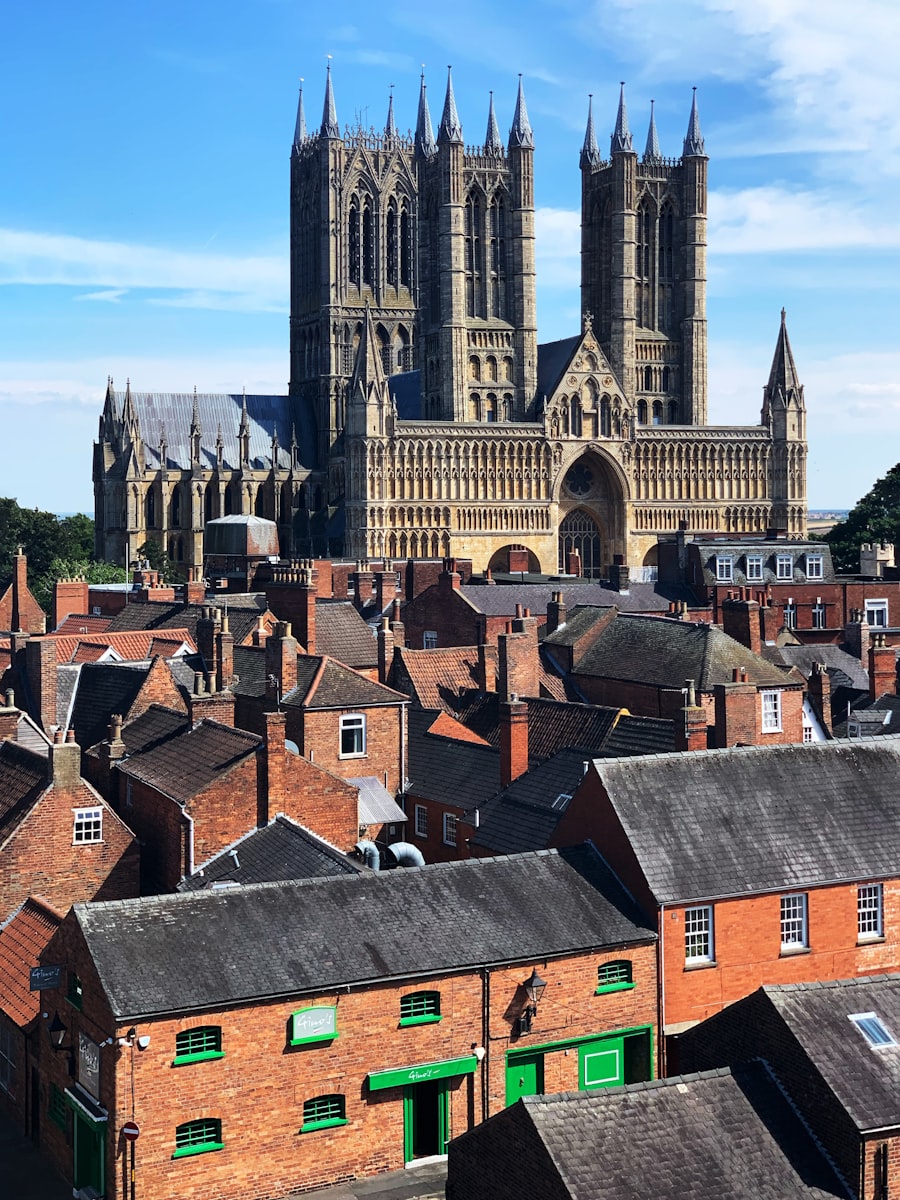
Solar panels for UK cathedrals — the cathedral specialist view
There are 42 Church of England cathedrals plus 22 Catholic cathedrals plus the cathedrals of the Church in Wales, Scottish Episcopal Church, and other Christian traditions in the UK. Cathedrals occupy a unique position in the church-solar landscape: large enough that solar economics work strongly, prominent enough that visibility matters extraordinarily, listed almost without exception (most Grade I), and governed by their own statutory framework distinct from parish faculty jurisdiction. We have engaged on a number of cathedral feasibility studies and worked with cathedral fabric committees, the Cathedrals Fabric Commission for England (CFCE), and Historic England to deliver schemes that meet the very high heritage bar cathedrals demand.
This page sets out the cathedral solar landscape in 2026: where panels typically go (rarely on the nave), how the governance works, what system sizes are realistic, how the economics play out, and what the strongest cathedral solar precedents look like.
Where solar typically goes on a cathedral
Almost no UK cathedral hosts solar PV on its principal Grade I roofscape. The visual impact of any rooftop array on a cathedral nave, transepts or chancel is generally judged unacceptable by both the CFCE and Historic England, regardless of panel colour or mounting style. Instead, cathedral solar typically appears on:
- Visitor centre and education building roofs — most cathedrals have a modern visitor centre or education annexe, often built since 2000, with flat or shallow-pitch roofs ideal for PV. Salisbury, Norwich, Durham, Hereford and several others have followed this route.
- Chapter house, song school and ancillary buildings — these are typically not Grade I and are visually peripheral to the main cathedral elevation.
- Cathedral schools and choir schools — adjacent education buildings owned by the cathedral foundation often have very strong solar economics (daytime occupancy, large flat roofs, predictable load profile).
- Cathedral close residential properties — Dean, Canons' and lay-clerk houses within the close are often suitable for discreet solar arrays.
- Ground-mounted arrays — where the cathedral owns land within the close or on satellite sites, ground-mounted PV is sometimes feasible and has been delivered by several dioceses.
The pattern is consistent: protect the Grade I main building, generate the carbon and cost saving from the supporting estate. This is also the pattern most often endorsed in CFCE guidance.
Governance — the Care of Cathedrals Measure 2011
Unlike parish churches, cathedrals are governed by the Care of Cathedrals Measure 2011. The fabric committee of each cathedral (or in the case of major changes, the CFCE itself) authorises works to the building. Catholic cathedrals operate under the Catholic Bishops' Conference of England and Wales (CBCEW) framework and the relevant diocesan trust. Welsh cathedrals (Llandaff, St Asaph, Bangor, St Davids, Newport, Brecon, Monmouth, Swansea and Brecon for the Catholic side) follow the Church in Wales Constitution.
For any cathedral solar scheme we engage at four levels:
- The Dean and Chapter (the cathedral's governing body)
- The cathedral fabric committee or fabric advisory committee
- The Cathedrals Fabric Commission for England (CFCE) for nationally significant changes
- Historic England (for Grade I and Scheduled Ancient Monument elements)
Typical timescale from initial feasibility to consents in place: 12–24 months for cathedral schemes, reflecting the additional consultation depth required.
Typical cathedral solar system sizing and cost
Cathedral solar schemes we've engaged on or studied range from 30 kW to 200 kW. The upper end is typically reserved for cathedrals with significant ancillary estate (large visitor centre, education complex, choir school). Typical metrics:
- 30 kW (visitor centre only): £30,000–£42,000 capex, generates 27,000 kWh/year, payback 8–11 years
- 80 kW (visitor centre + ancillary): £75,000–£100,000 capex, generates 70,000 kWh/year, payback 7–10 years
- 150 kW (full ancillary estate + cathedral school): £140,000–£185,000 capex, generates 135,000 kWh/year, payback 6–9 years
- 200 kW+ (large cathedrals with full estate): £180,000–£250,000+, payback 6–8 years
Cathedral funding routes are different from parish churches. National Lottery Heritage Fund grants for cathedrals frequently include energy components as part of wider conservation schemes. The Church Buildings Council and individual cathedral trusts often hold dedicated capital. Cathedral Friends groups, fundraising appeals, and major donor programmes are commonly used. We've seen cathedral solar schemes funded 60–100% from a combination of these sources, with the residual capex met from cathedral reserves.
Cathedral-specific design considerations
For cathedral solar, beyond the heritage-friendly panel design used at parish level, additional considerations apply:
- Visibility cones — Historic England assesses the visibility of any proposed array from multiple agreed viewpoints around the cathedral close and wider city. Computer-generated views are often required as part of the application.
- Setting and curtilage — cathedrals typically sit within Conservation Areas with statutory setting protection. The setting assessment can extend hundreds of metres beyond the cathedral itself.
- Archaeology — cathedral closes are usually archaeologically significant. Ground-mounted arrays may trigger archaeological assessments and watching briefs.
- Acoustic impact — inverters and cooling fans must be carefully sited to avoid impacting choral and worship acoustics, particularly during recordings, evensong and broadcast services.
- Choir and music school operations — cathedral schools are often the highest-value site for PV but their operation must not be disrupted. Install windows are typically school holidays.
Cathedral case studies — the public record
Several cathedrals have published their solar journey in detail:
- Salisbury Cathedral — 76 kW array on the visitor centre roof, commissioned 2018, supplying around 12% of the cathedral close's electricity demand. Funded via the Salisbury Cathedral Trust and a major donor.
- Hereford Cathedral — multi-stage PV programme across the cathedral close, including visitor centre and Mappa Mundi exhibition building.
- Norwich Cathedral — visitor centre roof PV and biomass heating system delivered as part of a wider Heritage Fund-supported decarbonisation programme.
- Gloucester Cathedral — a notable exception: 150 panels installed on the nave roof itself in 2016, granted faculty by Bishop Rachel Treweek following extensive heritage consultation. This remains rare and was particularly contested at the time.
The Gloucester case is instructive: it shows that nave-roof PV on a Grade I cathedral is achievable, but it required extraordinary consultation depth and a particular alignment of visibility, panel design, and supporting cathedral leadership. Most cathedrals are likely to stay with the ancillary-estate model for the foreseeable future.
What a cathedral solar feasibility engagement looks like with us
A cathedral feasibility study is a substantially deeper piece of work than a parish-church feasibility. Typically it involves:
- Initial scoping meeting with the Dean, fabric committee chair and chapter clerk
- On-site fabric and electrical assessment over 2–3 days
- Half-hourly demand modelling across a 12-month period for every metered building in the close
- PV yield modelling for every candidate roof and ground site
- CGI visualisation of the proposed array from agreed viewpoints
- Heritage impact assessment in alignment with Historic England guidance
- Funding strategy including National Lottery Heritage Fund pre-application
- Full written report and presentation to the fabric committee
We can engage at any point in this process — initial scoping, deeper feasibility, planning support, full delivery, or just providing peer review of an existing scheme. Cathedral engagement is by necessity a slower, more deliberative process than parish work, and we adapt accordingly.
Cross-link: cathedrals sit within a wider diocesan strategy
Cathedral solar is most powerful when it's part of a wider diocesan story: net zero by 2030, cathedral as flagship, parish-by-parish rollout following. We work across parish churches, free churches, Catholic parishes and parish halls, so the cathedral-level engagement can connect into the diocesan pathway directly.
Typical cathedrals install at a glance
- System size
- 30–200 kW
- Panels
- 55–370
- Roof area
- 200–1,200 sqm
- Project value
- £40,000–£250,000
- Payback
- 8 years
- Annual generation
- 27,000–185,000 kWh
- Annual CO₂ saved
- 6–42 tonnes
- Compliance
- Care of Cathedrals Measure 2011. Cathedrals Fabric Commission for England (CFCE). Often national-significance heritage — Historic England engagement essential.
Common questions
Can we install solar on a Grade I or Grade II* listed church?
Often yes, with faculty and Listed Building Consent. We've installed on Grade II Anglican parish churches and worked through faculty applications for Grade II* sites. Grade I and cathedrals require Cathedrals Fabric Commission (CFCE) involvement and Historic England consultation. Visual impact is minimised: black-on-black panels, less-visible slopes, sometimes outbuildings instead of the main church.
How much do solar panels for a church cost in the UK?
Parish churches (8–40 kW): £10,000–£50,000. Cathedrals and large historic churches (30–200 kW): £40,000–£250,000. Church halls (10–80 kW): £12,000–£90,000. Cost per kW £1,000–£1,400 typical for sub-30 kW heritage installs (specialist work), falling to £900–£1,100/kW for 50 kW+ installs.
Will solar panels affect our church's listed status or heritage?
No — Listed Building Consent confirms the works are acceptable. The listing remains. Most installs are designed to be reversible (no permanent structural change) so future generations can remove the panels if technology evolves. Historic England has published guidance supporting solar on listed places of worship.
Are there installers who specialise in heritage churches?
Yes — and you should insist on it. Ask for: previous faculty applications (with DAC reference), Historic England correspondence, EASA membership, MCS commercial certification, and references from church-warden or diocesan contacts. Avoid any installer who treats your project as just another commercial install.
Do solar panels reduce the value of our church building?
Church buildings held in a parish trust are not valued commercially in the way private residential or commercial buildings are. The relevant consideration for a PCC is heritage impact (does the installation harm the significance of the building?) and mission impact (does it serve the parish's ministry?). A well-designed heritage solar installation does not harm the significance of a well-designed church building - this is the position of most DACs and is supported by Historic England's published guidance.
What grants are available for church solar?
Buildings for Mission (CofE national), diocesan Net Zero / Carbon Reduction programmes, Listed Places of Worship VAT grant scheme, National Lottery Heritage Fund (when part of wider conservation), Catholic diocesan trust funds, and various local foundation grants. Combined, capex can typically be reduced by 50–100% for parish-scale installs.
Can Catholic churches get the same grants as CofE churches?
Most church solar grants are open to all denominations. The Listed Places of Worship VAT Grant Scheme covers all listed places of worship regardless of denomination. National Lottery Heritage Fund grants are available to listed Catholic churches. Catholic diocesan capital funds (Birmingham, Westminster, Salford, Liverpool, Clifton and others) provide grants or loans for parish sustainability projects. Buildings for Mission is CofE-specific; the equivalent Catholic programmes are diocesan capital funds and Caritas sustainability programmes.
What is the Church of England's net zero 2030 target and how does solar help?
The Church of England committed in 2020 to reaching net zero carbon by 2030, covering all energy use across approximately 16,000 parish churches, 4,700 church schools, cathedrals, and diocesan offices. Solar PV is the fastest-deployable and most cost-effective decarbonisation tool for most parish churches and halls. Most diocesan Net Zero programmes now require a parish to have completed a solar feasibility assessment as part of their net zero pathway planning.