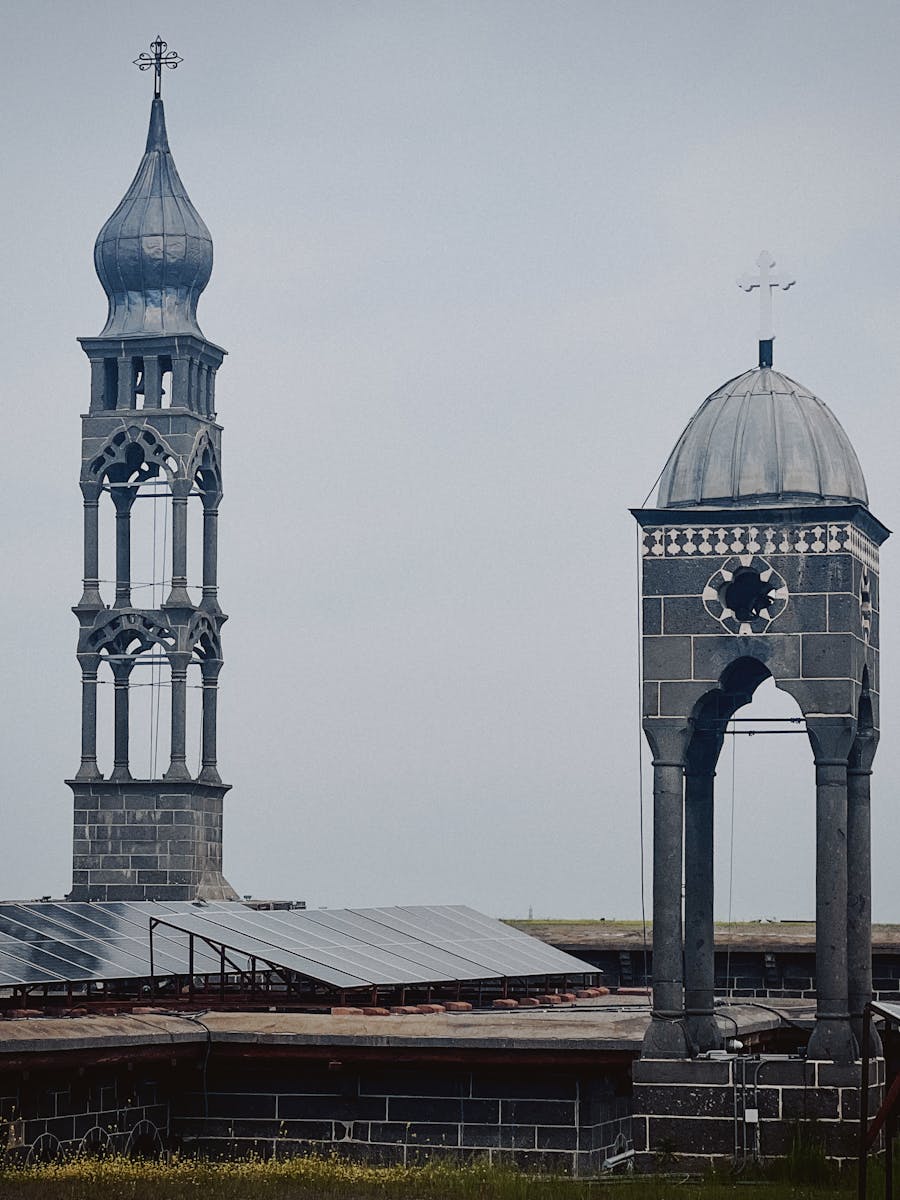
The churchwarden's view of parish solar
For most parishes, the churchwarden is the project sponsor. You sign the faculty petition. You host the on-site survey. You're the main point of contact during install. Your fellow PCC members look to you for the steady hand. The good news: a well-run parish solar project is one of the most rewarding things a churchwarden can deliver — visible to the congregation, demonstrably stewarding the church's resources, and lasting 25 years.
The honest news: faculty applications take time, install weeks are disruptive (briefly), and the diocesan paperwork is real. We design our process to minimise the load on the churchwarden — typically four substantive PCC meetings and one or two days of on-site presence — but the role still matters.
Faculty jurisdiction — what you actually sign
For CofE parishes, you'll sign three formal documents: the PCC resolution (minuted at the meeting where the PCC votes to proceed), the faculty petition itself (signed by both churchwardens), and (sometimes) a parish notice for the 28-day public-notice period.
The Statement of Significance, Statement of Needs and detailed proposal are drafted by us. The churchwarden reviews them and (in most cases) signs nothing on those documents directly — they're appendices to the petition. We're happy to walk you through any of the drafting before submission.
For Catholic, Methodist, URC and free-church parishes, the documentation is simpler: a trustee resolution and (for listed buildings) a Listed Building Consent application. No faculty equivalent applies.
The numbers above are from real installs — yours will be different
Grant eligibility, listing grade, roof orientation, and your congregation's energy pattern all move the final figure. Our free feasibility models your specific church and is formatted for your role — PCC presentation-ready, with the numbers your committee will actually ask about.
Get your church's free feasibility →Churchwarden's site-visit checklist
- Schedule on-site survey for a non-service day (typically Tuesday-Thursday)
- Confirm access to roof void (vestry usually) and electrical cupboard
- Have churchyard parking arrangements clear
- Invite the diocesan architect to attend if possible
- Hold any cleaning/decorating work in the affected area until after survey
- Capture any concerns from sidesmen, the vicar, or congregation members in writing for us to address
- Have the last quinquennial report ready for inspection
- Note any structural concerns the diocesan architect has raised
- Confirm electrical supply rating (single/three phase, main switch amps) if known
- Consider whether the parish appeal can run alongside grant application
What Churchwardens typically experience
What to tell the congregation
Communication patterns we've seen work in successful parish projects: PCC briefing first (in person), then parish notices (3–4 weeks of brief mentions), then a parish magazine feature article when the project is committed. After commissioning, a Sunday-morning dedication or short presentation in the service, then an open day inviting parishioners to see the system. Local newspaper feature optional but often welcome.
The strongest single piece of communication is the parish magazine feature article (typically 600–1,000 words). It should cover the rationale (energy cost, carbon, mission), the funding (where the money came from, what the PCC contributed), the technical (what panels, where, why), and the future (Eco Church credit, ongoing carbon reporting). We can provide a draft article based on the final design.
What not to do: don't announce in service before PCC has formally resolved. Don't promise specific savings figures without our modelling. Don't downplay heritage trade-offs — the congregation can see whether panels are visible from the lych gate and will trust honest communication more than spin.
Common Churchwarden questions
Do I need to be on site during the install?
No, but it helps. Most churchwardens drop in once or twice during the install week to confirm access, check on progress, and answer any questions from the install crew. Our crew is fully self-sufficient and works to a detailed risk assessment and method statement.
What if the vicar or PCC has concerns mid-project?
Bring them to us early. We've delivered fifty parish projects and have heard most concerns before. We'll attend a PCC meeting (by phone or in person) at no charge to discuss any issue. The faculty pathway is designed to surface concerns formally during DAC consultation; we encourage informal raising of issues before that.
Can we visit a recent install before committing?
Yes. We can arrange visits to churchwardens at recent install parishes within reasonable travel of your church. Most churchwardens find this the single most valuable step in their decision process. Ask us and we'll connect you directly.
What if the diocesan architect doesn't approve?
We engage with the diocesan architect at survey stage, before formal proposal. Their input shapes the design. We've never had a diocesan architect veto a properly-developed scheme. Where modifications are requested, we redesign and re-engage.
Are heritage panels really invisible?
Black-on-black panels on a less-visible roof slope (chancel south rather than nave south) are dramatically less intrusive than 2010s blue-cell silver-frame panels. From the principal approach to most churches, modern installs are very difficult to spot. We're happy to show you in-situ photos from comparable parishes.