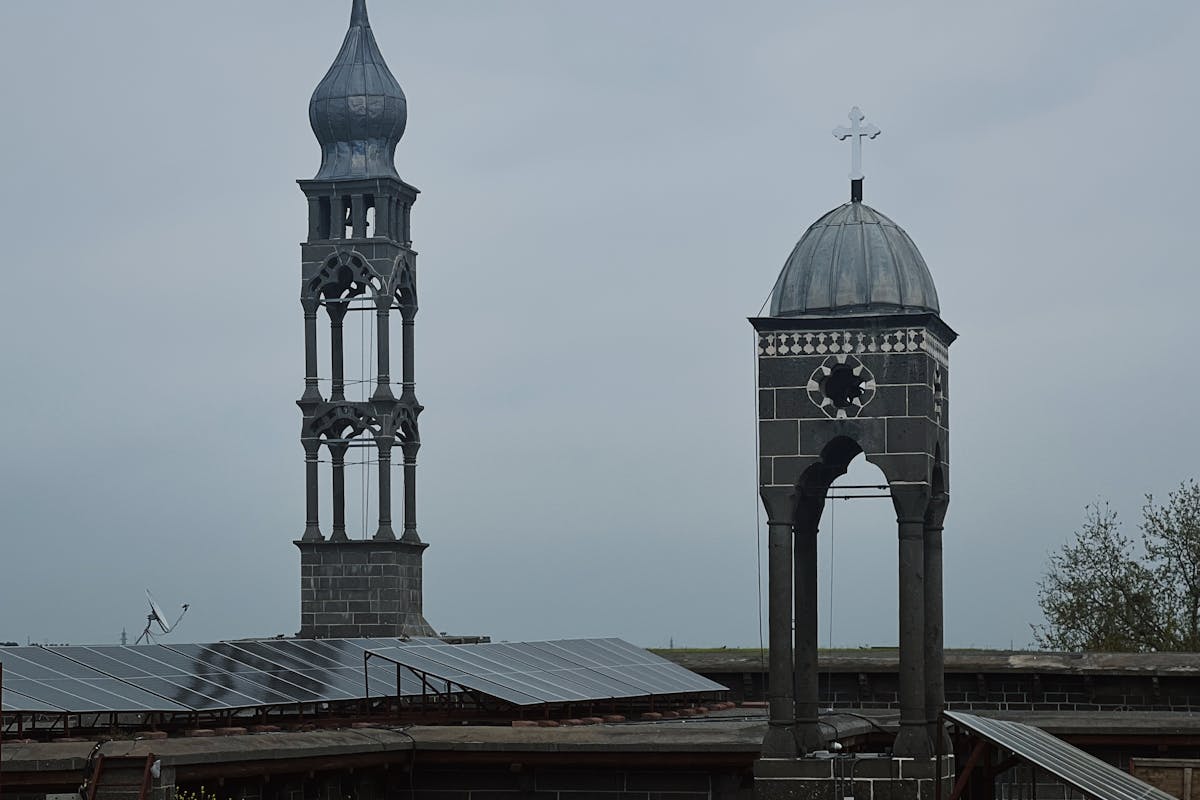
The parish heating problem
Most UK parish churches heat with oil, LPG or electric resistive heaters. The Church of England national net zero commitment by 2030 effectively requires elimination of fossil heating from the parish estate. Heat pumps are the principal route — but the church itself is often a hard retrofit case due to heritage fabric, low utilisation, and air-leakage limits.
The pragmatic pathway for most parishes: heat pump retrofit on the hall first (Phase 1, often grant-supported), continued oil/gas on the church for now (Phase 2 once technology and grants align), pair with solar PV to power the heat pump from on-site renewable generation.
Air-source vs ground-source for parishes
Air-source heat pumps (ASHP) are the more common choice for parish halls. Capex £15,000–£40,000 for a typical 20–40 kW unit; coefficient of performance (CoP) 2.8–3.8 depending on flow temperature. Wall-mounted external unit; minimal disruption.
Ground-source heat pumps (GSHP) suit parishes with churchyards or glebe land. Higher capex £35,000–£90,000 (boreholes drive cost up) but CoP 3.5–4.5 and longer asset life (25+ years). Best for substantial parish complexes — combined church+hall+vicarage on a single ground loop.
We've delivered ASHP retrofits on Methodist halls (1970s buildings, easy retrofit), URC halls (modern construction), and several CofE parish halls. GSHP work for parishes is more specialist; we partner with ground-loop specialists for those projects.
Funding routes for parish heat pumps
Public Sector Decarbonisation Scheme (PSDS) — closed to new applications in November 2024, and no new window had opened as of September 2026. It funded public-sector buildings only; ordinary parish churches were not eligible.
Boiler Upgrade Scheme (BUS) — £7,500 grant for ASHP, £7,500 for GSHP. Applies to most parish properties.
Buildings for Mission (CofE national) — covers heat pump retrofits alongside solar PV.
Diocesan capital programmes — most now fund heat pumps as well as solar.
Combined solar+heat pump installations often deliver the best economics because the solar offsets the heat pump's electricity demand.
Pairing heat pumps with parish solar
A heat pump roughly triples the parish's electricity demand. Pairing with solar offsets that increase, often taking the parish to net zero on Scope 1 + 2 emissions (combined heating and electricity).
Typical parish combined-system sizing: 15–25 kW solar PV + 20–40 kW air-source heat pump + 15–25 kWh battery storage. Combined capex £45,000–£90,000; combined grants typically cover 60–90%.
Order of installation matters: solar PV first (Year 1), heat pump second (Year 2–3) once parish is ready for the larger project. Grants for combined schemes are more accessible than two separate applications.
Church heat pump grants: what a parish can actually claim
Funding a parish heat pump is more fragmented than funding solar — there is no single scheme built for a church, so most projects stack two or three sources. These are the routes a PCC or trustee body usually works through, in the order they tend to matter:
- Boiler Upgrade Scheme (BUS). The government pays a flat £7,500 towards an air-source heat pump in England and Wales (ground-source qualifies too), claimed by your MCS-certified installer and deducted from the quote — not paid to the church. The catch for churches is real: BUS normally needs a valid EPC with no outstanding insulation recommendations, and many places of worship are EPC-exempt and simply do not hold one. Confirm the EPC position before you bank on the £7,500.
- Buildings for Mission and diocesan net-zero grants. Church of England parishes apply through their diocese for a share of the Buildings for Mission fund; several dioceses ring-fence part of it for heat decarbonisation and quinquennial-linked fabric work. Amounts and criteria vary diocese to diocese, so start with your DAC or net-zero officer.
- Benefact Trust and Demonstrator Churches. The Benefact Trust makes building grants to churches of up to around £36,000, and the CofE Demonstrator Churches programme has backed whole-building net-zero retrofits up to roughly £50,000. Both are competitive and favour a clear worship-and-community case, not carbon numbers alone.
- Listed Places of Worship VAT recovery. If your building is listed, the Listed Places of Worship Grant Scheme lets you reclaim the 20% VAT on eligible works. On a heat-pump retrofit that is a material saving even though it is not, strictly, a capital grant.
The numbers only work when these combine — a BUS payment, plus a diocesan or trust grant, plus VAT recovery can turn an intimidating retrofit invoice into a manageable net figure, exactly as the solar side stacks Buildings for Mission with Listed Places of Worship VAT. It is worth weighing a heat pump against, or alongside, a rooftop array before committing: see the wider church grants and funding picture and our breakdown of what a parish energy scheme costs. A paired solar-and-heat-pump feasibility is the cleanest way to see which grants your church actually qualifies for — request a free feasibility and we will model the stack for your building.
Can a church claim the Boiler Upgrade Scheme for a heat pump?
Sometimes, but not automatically. BUS covers small non-domestic buildings as well as homes, so a church can qualify — but the property normally needs a valid EPC with no outstanding insulation recommendations, and many places of worship are EPC-exempt and have never held one. Your MCS-certified installer makes the claim and takes the £7,500 off the quote, so confirm the EPC position early rather than assuming the grant is there.
Are churches eligible for the Public Sector Decarbonisation Scheme (PSDS)?
Usually not. PSDS, run by Salix, funded heat decarbonisation for public-sector bodies until it closed to new applications in November 2024, such as councils, NHS trusts and state schools, and most churches are charities or trusts rather than public-sector organisations, so they fall outside it. The exception is a building owned or run by a public body, for example some church-linked maintained schools. For the typical parish, Buildings for Mission, the Benefact Trust, the Boiler Upgrade Scheme and Listed Places of Worship VAT recovery are the realistic routes.
Common questions
Can we put a heat pump on a listed church?
Yes, with Listed Building Consent. The principal constraint is the external unit's visibility — modern wall-mounted units are typically acceptable in less-visible elevations. Underground (ground-source) installations have lower visibility but higher cost.
Does the heat pump need a wet system to work?
Yes — heat pumps work best with hydronic (water-circulating) heating. Most parish halls already have radiators or underfloor heating; ASHP retrofit is then straightforward. For churches with electric resistive heaters (no wet system), a hybrid approach may be appropriate.
What about hot water?
Heat pumps produce hot water for kitchens and toilets at a separate flow temperature. Combined system with thermal store handles peak demand. Typical kitchen-only DHW capacity is small for parish use.
Will the heat pump run from solar alone?
Partially. Solar offsets ~30–60% of heat pump electricity demand for a typical UK parish. The remaining demand comes from grid; with battery storage, more can be self-consumed.
How long does a heat pump retrofit take?
ASHP: 1–3 weeks on site for hall installation. GSHP: 4–8 weeks (longer for borehole drilling). Total project time from PCC resolution to commissioning: 8–14 months.