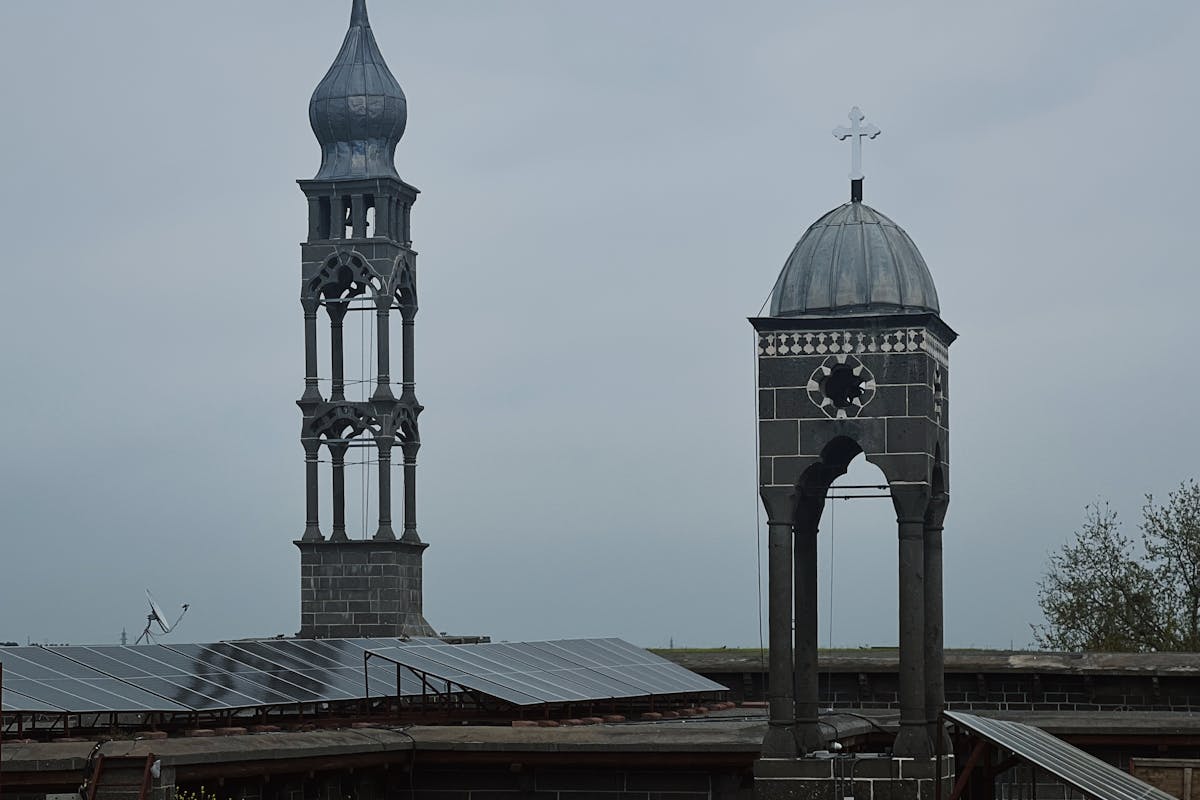
Why parishes are adding EV charging
Four drivers: (1) congregation members increasingly drive EVs and value charging during services or hall events, (2) parish hall hires (community groups, weddings, baby groups) increasingly expect EV charging availability, (3) clergy and parish administrators driving EVs need workplace charging, (4) charging income can offset hall hire pricing or contribute to parish budgets.
Most parish EV installations are modest: 2–4 sockets on the church car park or hall car park, 7 kW per socket (single-phase) or 22 kW per socket (three-phase). Larger parishes with substantial hall bookings sometimes install 6–10 sockets.
Visibility considerations for listed parish churches: chargers should be sited away from principal elevations, typically on outbuilding walls, modern car park structures, or freestanding posts. Most LBC approvals require chargers to match adjacent building style.
OZEV Workplace Charging Scheme grants
The Office for Zero Emission Vehicles (OZEV) Workplace Charging Scheme provides up to £500 per socket since 1 April 2026 (max 40 sockets per applicant) for businesses, charities, and public-sector organisations. Most CofE PCCs qualify via charitable trust status; Catholic, Methodist, URC parishes also qualify.
Application process: register the parish on the OZEV portal, identify an OZEV-approved installer (we are one), submit the application with proposed installation details, install within 6 months of approval. We handle the entire application alongside the technical install.
Other funding routes: OZEV's home and workplace chargepoint grants were extended for a final year from 1 April 2026 — the grant for renters and flat owners covers 75% of installation cost up to £500 per socket, but excludes anyone living in a house they own, so check OZEV's eligibility rules before assuming a vicarage or parish-owned house qualifies; some local authority charging grants for community buildings; ChargePoint Operator (CPO) revenue-share models where the parish hosts the chargers but doesn't own them.
Solar + EV charging integration
Pairing rooftop solar with EV charging gives the parish a meaningful proportion of zero-carbon transport from on-site generation. Modern EV chargers can be configured to charge only when solar is generating ('solar-led' or 'eco' mode), maximising self-consumption.
A typical 15 kW solar system with 2 × 7 kW EV chargers can charge two vehicles simultaneously from solar alone during peak generation hours. For congregational use, vehicles parked during a Sunday service or weekday hire receive 4–10 kWh of solar-generated charge per visit (15–40 miles of range).
Battery storage extends EV charging into evening hours when solar isn't generating. Many parishes with combined solar+battery+EV systems achieve 70%+ of EV charging from on-site renewables annually.
Installation and operational considerations
Electrical supply: most parish car parks have limited existing supply. 7 kW single-phase sockets typically don't require upgrades. 22 kW three-phase sockets require three-phase supply (most parish halls have this; rural churches often don't).
DNO connection: 22 kW chargers may require G99 grid connection application alongside solar G99. 7 kW chargers typically fit under existing G98 capacity.
Payment and access: parishes choose between free use (congregation/hall hires only), pay-by-app (open public access), or hybrid (free for hall hires, pay-by-app for general public). Most CPO platforms (Pod Point, Char.gy, Connected Kerb) offer revenue-share arrangements.
Common questions
Do we need planning permission for EV chargers?
Usually no for chargers on existing car park areas. Listed buildings may require Listed Building Consent for visible chargers. New car park surfacing or substantial groundworks may need planning. We confirm at survey stage.
How much do EV charger users pay?
Typical commercial CPO rates 30–60p/kWh (vs grid retail 22–28p/kWh; vs solar generation effectively 0p/kWh). Parish margin can be 5–20p/kWh after CPO platform fees.
Can the parish own the chargers outright?
Yes — capex £1,500–£3,500 per 7 kW socket installed, £3,500–£6,500 per 22 kW socket. OZEV grant reduces this by up to £500/socket (Workplace Charging Scheme rate since 1 April 2026). Most parishes either own or use revenue-share with a CPO.
What if no one uses the chargers?
Most parish chargers see modest use in Year 1, growing significantly Year 2-3 as congregational EV adoption rises. We sometimes recommend starting with 2 sockets and adding more later. CPO revenue-share models have no parish cost if usage is low.
Will the chargers work in winter?
Yes. Modern chargers are weatherproofed (IP54 minimum) and operate down to -25°C. Cable and connector heating prevents freezing in extreme cold.