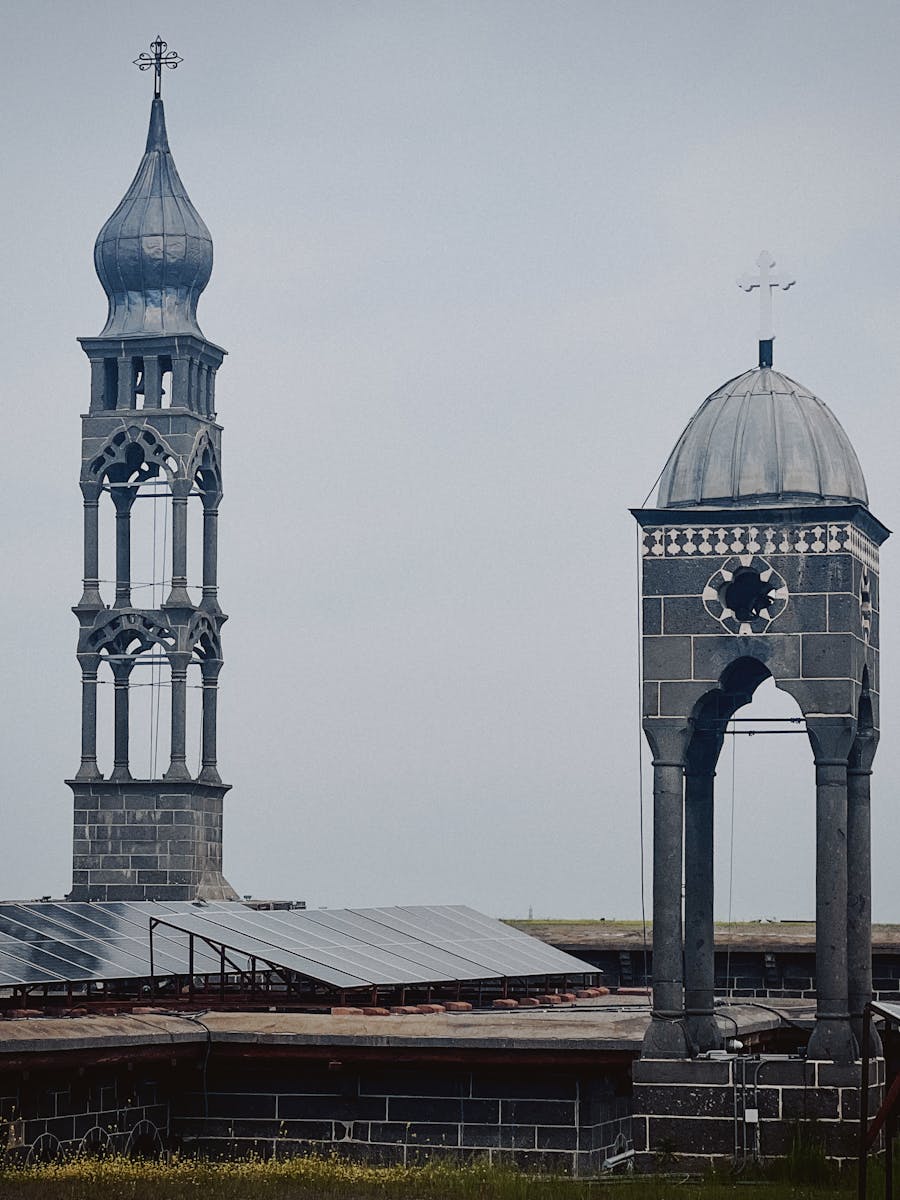
The Welsh church estate
Wales has a distinctive church estate. The Church in Wales (CinW), disestablished in 1920, is a separate province from the Church of England with its own constitution, faculty system, and net zero pathway. Roughly 1,300 CinW parishes across six dioceses: Llandaff, Monmouth, St Davids, Swansea & Brecon, St Asaph, and Bangor. The Catholic Church in Wales operates through the Archdiocese of Cardiff and the Diocese of Menevia (covering west Wales and Anglesey).
Non-Anglican traditions are particularly strong in Welsh church culture: Methodist Cymru District, Presbyterian Church of Wales (Calvinistic Methodist), Baptists Wales, URC Cymru, the Union of Welsh Independents. Many Welsh chapels are listed Grade II or II* and represent some of the most architecturally distinctive Nonconformist heritage in Britain.
Faculty jurisdiction in the Church in Wales
The Church in Wales operates a parallel faculty system distinct from the English one. Each of the six Welsh dioceses has a Diocesan Advisory Committee (DAC) and a Diocesan Chancellor. Process broadly mirrors the English system but with Welsh-specific constitutional grounding. We have prepared faculty applications across the Diocese of Llandaff and Diocese of Monmouth and engage directly with the relevant DAC offices.
Welsh-specific grant programmes
- Church in Wales Net Zero Carbon Fund — central CinW fund for parish solar and energy works
- Welsh Government Net Zero Public Sector programme — applicable to some church-school sites
- Cadw heritage grants — for listed Welsh chapels and churches as part of wider conservation projects
- Listed Places of Worship Grant Scheme (DCMS) — applies UK-wide including Wales
- Local Welsh foundation grants — many counties have specific Welsh-language community heritage trusts
- Welsh Methodist Net Zero programme — Cymru District specific
Bilingual delivery
For Welsh-medium parishes we can provide application materials, drawings, and PCC briefing documents in Welsh alongside English. Our standard delivery is in English; Welsh translation is available at no extra cost for parishes where Welsh is the principal liturgical language. Several Welsh-language media outlets (BBC Cymru, Golwg, Y Tyst, Tabernacl publications) follow parish renewable energy stories closely.
Solar PV across Welsh dioceses
Geographic coverage
We deliver across Wales — from the urban dioceses of Llandaff (Cardiff) and Monmouth (south-east Wales) to the deeply rural St Davids (Pembrokeshire and west Wales) and Bangor (Gwynedd, Anglesey, north Wales). Welsh travel and engagement is a standard part of our practice; we don't add Welsh delivery premiums.
Cardiff and the South Wales corridor
Cardiff is the largest urban concentration of Welsh churches and where most of our recent Welsh work has been delivered. See our Cardiff page for detailed information on the Diocese of Llandaff, Archdiocese of Cardiff, and the local Welsh chapel network.
Welsh church solar — common questions
Does the Church in Wales use faculty jurisdiction?
Yes — the Church in Wales operates its own faculty system under the Constitution of the Church in Wales (separate from the English Care of Churches Measure 2018). Each of the six Welsh dioceses has its own DAC equivalent and Chancellor.
Is the Church in Wales committed to net zero?
Yes — the Church in Wales has committed to net zero by 2030 across all six Welsh dioceses, in line with the wider Anglican Communion commitment.
Are there Welsh-specific grants for church solar?
Yes — the Welsh Government Net Zero programme supports public-sector and community-sector decarbonisation. Church in Wales operates its own Net Zero Carbon Fund. Many Welsh Methodist and chapel circuits have access to specific Cymru-region capital programmes.
Do we need planning permission in Wales?
Listed buildings: yes (Listed Building Consent under Welsh planning law via Cadw / local authority). Non-listed buildings: typically Permitted Development under Welsh GPDO. Faculty applies to consecrated Church in Wales buildings.
What language considerations apply?
For bilingual parishes we can provide application materials in Welsh and English. Engagement with local Welsh-medium media and chapel networks often runs through Welsh-language channels.
Related: South Wales Llandaff Diocese church solar guide · Diocese of Llandaff page · Diocese of Monmouth page · Cardiff church solar