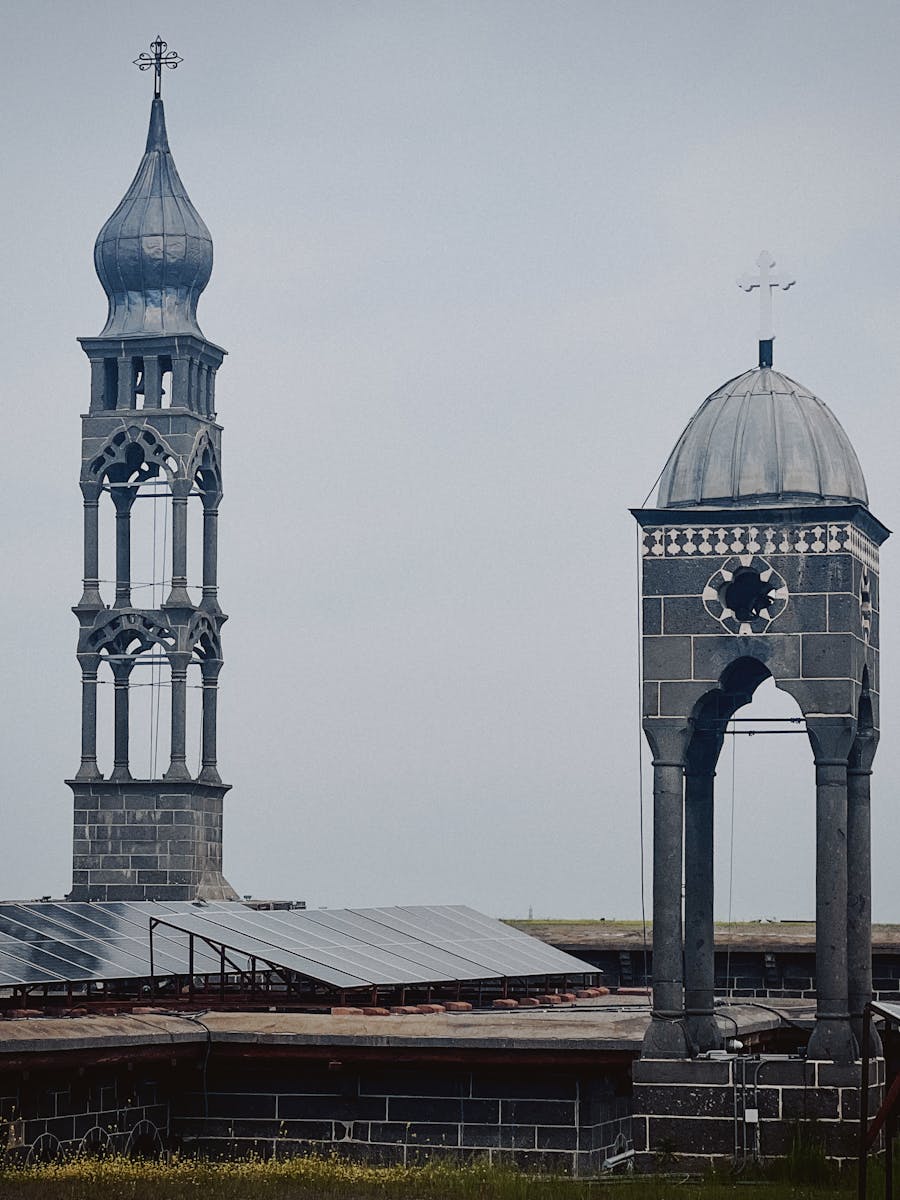
Quick answer
It depends on the building. Unlisted modern free-church and parish hall buildings typically need only Permitted Development under Class A Part 14 GPDO. Listed buildings need Listed Building Consent (civil regime) plus, for CofE, a faculty. Permission requirements differ by denomination and listing status.
Full answer
Decision tree: (1) CofE parish church (consecrated)? Faculty required regardless of listing. (2) Listed building (any tradition)? Listed Building Consent required. (3) Conservation area or scheduled ancient monument? Additional planning consents may apply. (4) Unlisted non-CofE modern building? Permitted Development usually applies — no formal application needed beyond DNO grid connection.
Permitted Development under Class A Part 14 of the Town and Country Planning (General Permitted Development) (England) Order 2015 covers rooftop solar PV on non-domestic, non-listed buildings subject to standard conditions: panels must not extend more than 200mm above the roof; total array area within standard limits; no installation on Article 4 Direction areas without specific permission.
Article 4 Directions can require formal planning permission even for Permitted Development categories. Most UK conservation areas have some Article 4 coverage. Check with the local planning authority's heritage team before assuming Permitted Development applies.
DNO grid connection is separate from planning. Every solar installation needs a G98 (sub-13 kW) or G99 (above 13 kW) connection application to the local Distribution Network Operator. Typical timescales: 4–8 weeks for G98, 8–16 weeks for G99.
Related questions
- What is faculty jurisdiction?
- Do Methodist churches need planning permission for solar?
- What is a Listed Building Consent?
- What is a DNO connection?