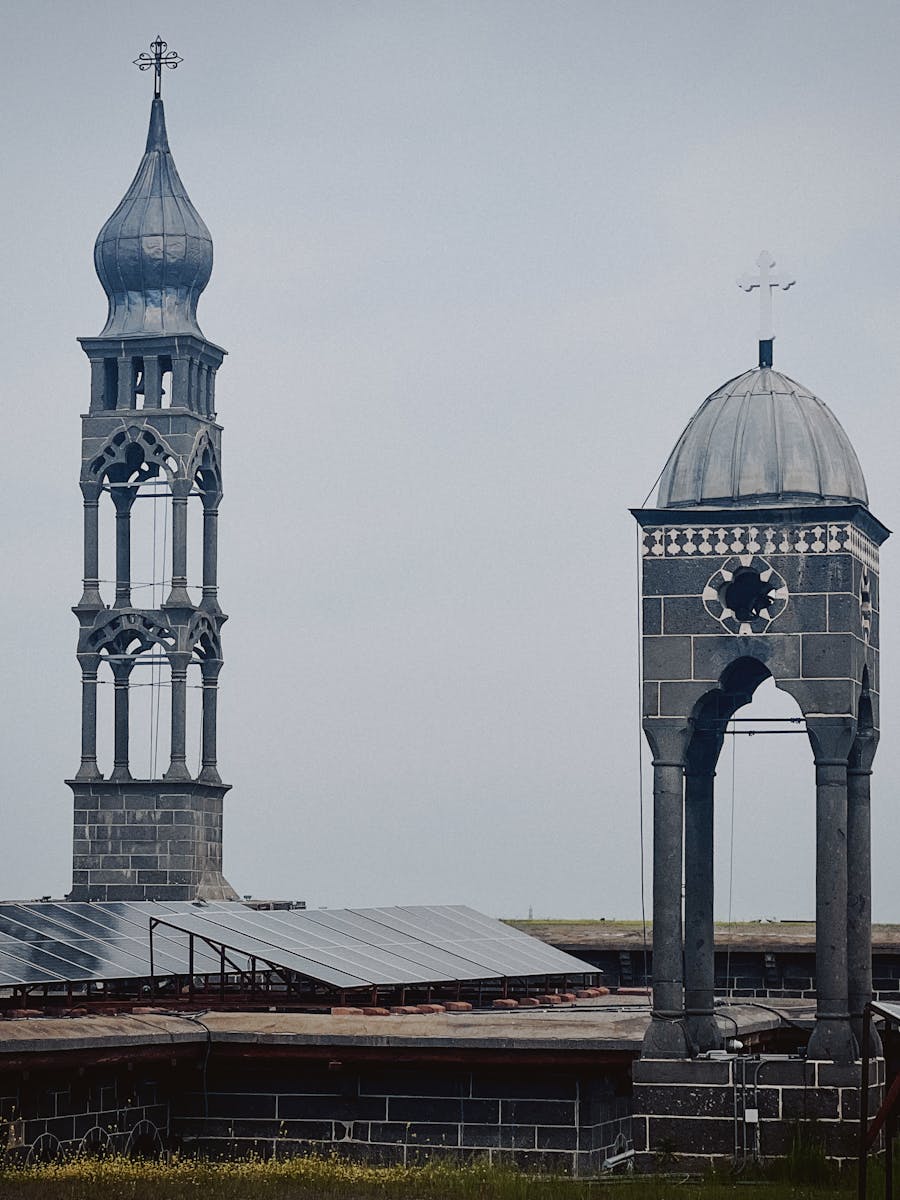
Quick answer
Most UK churches are suitable for solar. The key tests are: (1) at least 50 m² of usable south-facing roof; (2) annual electricity bill above £2,500; (3) listing status compatible with available slopes; (4) hall on site or feasible church-only economics; (5) PCC capacity and diocesan support. A free desk feasibility gives a definitive answer for your specific parish.
Full answer
The headline numbers: of the roughly 16,000 CofE parish churches plus several thousand Catholic, Methodist, URC and free-church buildings in the UK, our analysis suggests 70-85% are technically and economically suitable for solar PV with current grant funding. The remainder are limited by one of: insufficient south-facing roof, very low electricity consumption, severe heritage constraints, or parish capacity issues.
The single biggest test is south-facing roof area. You need approximately 50-100 m² of unshaded south-facing slope for a viable system. Many medieval east-west-oriented parish churches have this on the chancel south slope or nave south slope. Some don't — particularly small medieval churches with steep pitches and dormers/spires interrupting the south slope.
The second biggest test is electricity consumption. Below ~£2,500/year (11,000 kWh) the economics become marginal even with full grant coverage. Above £4,000/year the case is typically very strong.
Listing status matters but rarely prevents solar. Grade II is straightforward, Grade II* requires more careful design, Grade I usually requires solar on ancillary buildings rather than the principal nave roof. Only a handful of UK churches are truly unable to host solar somewhere on the site.
Hall presence dramatically improves economics. A Sunday-only church alone has self-consumption around 25-40%; a combined church+hall site has 60-75% self-consumption thanks to weekday hall use. If your parish has a hall, the project is almost certainly viable.
We provide a free 7-working-day desk feasibility for any UK parish. The feasibility tells you which of the tests your parish passes and which (if any) it fails. Most parishes are pleasantly surprised — solar is more feasible than parish leaders typically assume.
Related questions
- How much roof area do we need?
- What if our church faces east-west?
- Does our listing status prevent solar?
- What is the minimum electricity bill for viable solar?