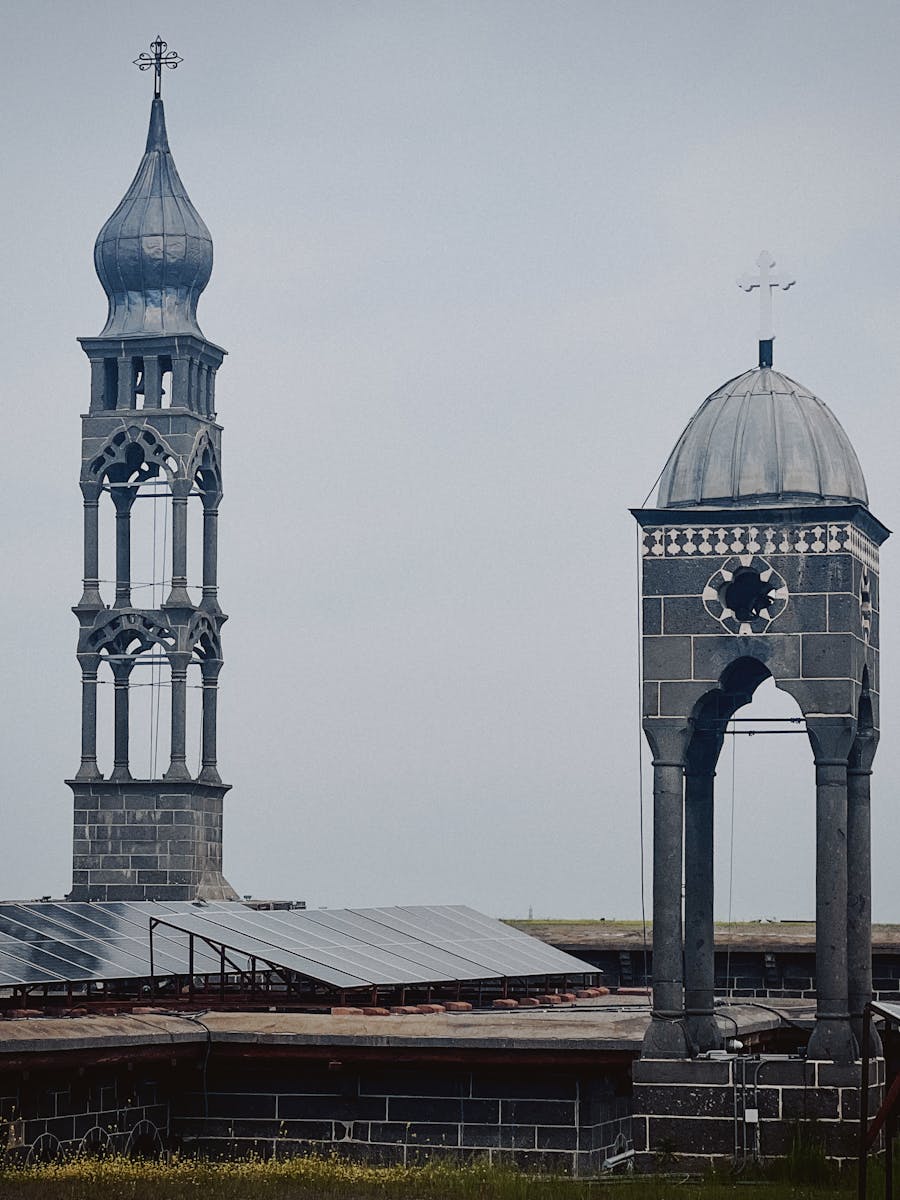
Part of our wider work on solar panels for religious buildings across every UK faith tradition.
The UK synagogue estate
The UK has approximately 400 synagogues across several Jewish denominations: United Synagogue (largest, broadly Orthodox), Movement for Reform Judaism, Liberal Judaism, Masorti Judaism, Sephardi communities, and various Ultra-Orthodox congregations. Geographically concentrated in London, Manchester, Leeds, Glasgow, Liverpool, Birmingham, and Brighton, with smaller communities across other major cities.
Many historic UK synagogues are listed, Bevis Marks (1701) being the oldest still in use. Listing changes the consent route, but since 1 February 2024 it no longer changes the VAT: installing solar is an installation of energy-saving materials, and that is zero-rated in a building used solely for a relevant charitable purpose until 31 March 2027, listed or not. The Listed Places of Worship Grant Scheme, which used to reimburse the 20% VAT on works to listed places of worship, closed on 31 March 2026 and will not reopen. Check your own building's listing on the National Heritage List for England, or the equivalent register in Scotland, Wales or Northern Ireland.
Governance and permitting
Synagogue governance flows through the local Honorary Officers (board), with broader denominational support from the relevant Beth Din or rabbinical authority. No faculty-equivalent system applies — solar PV installations follow standard civil planning law: Listed Building Consent for listed buildings, Permitted Development (Class A Part 14 GPDO) for unlisted commercial-type roofs.
Most UK synagogues hold their property through charitable trust structures. Trustee approval is straightforward; substantial capital works typically need Honorary Officers' resolution and (for larger projects) wider community consultation.
Funding routes
- 0% VAT on the installation — energy-saving materials relief for buildings used solely for a relevant charitable purpose, until 31 March 2027 (then 5%). This replaced the need to reclaim VAT; the DCMS Listed Places of Worship VAT scheme closed on 31 March 2026
- Jewish charitable foundations — Pears Foundation, Rothschild Foundation, Maurice Wohl Foundation, Garfield Weston, others supporting Jewish community capital
- National Lottery Heritage Fund — for listed synagogues as part of wider conservation projects
- United Synagogue capital programmes — for US-affiliated synagogues, central US capital support for member synagogues
- Local authority climate emergency funds — accessible to all UK places of worship for community-benefit projects
Shabbat and festival considerations
Modern solar PV systems operate autonomously without need for human intervention. Once commissioned, the system generates electricity continuously, batteries charge/discharge automatically, and the inverter handles grid synchronisation without manual control. No Shabbat or Yom Tov observance issue arises from the system's normal operation.
For Orthodox synagogues with specific Shabbat-mode requirements (e.g. timer-based Shabbat clocks, pre-set lighting circuits), we can design solar to interact correctly with existing Shabbat-mode infrastructure. We've delivered installations for several UK Orthodox congregations where the existing Shabbat-clock infrastructure was preserved and integrated with the solar system.
Common synagogue solar questions
Does the Listed Places of Worship VAT scheme apply to synagogues?
Not any more — and for solar you should not need it. The DCMS scheme covered listed places of worship of all faiths, but it closed to new applications at 23:59 on 31 March 2026, its budget was fully allocated and the government confirmed there would be no further funding rounds. It has been replaced in England only by the Places of Worship Renewal Fund, a £92m four-year capital programme run by Historic England for repair and maintenance, whose opening date and scope for energy measures were not published as at September 2026. Separately, and more usefully: installing solar is an installation of energy-saving materials, which is zero-rated for VAT in a building used solely for a relevant charitable purpose until 31 March 2027. A synagogue charity in that position pays no VAT on the install, so there is no 20% to reclaim.
Do we need a faculty equivalent for synagogue works?
No — faculty jurisdiction is unique to the Church of England. Synagogue governance flows through the local congregation board with United Synagogue, Movement for Reform Judaism, Liberal Judaism, or Masorti Judaism national support depending on tradition.
What about Shabbat and festival considerations?
Solar systems run autonomously — no Shabbat/Yom Tov issues with normal operation. For systems with battery storage, the battery management system handles grid switching automatically. We can configure systems to avoid any inverter operations that would conflict with Shabbat observance if requested.
Are there Jewish-community grant routes?
Yes — several Jewish charitable foundations support synagogue capital projects (Pears Foundation, Rothschild Foundation, Maurice Wohl Foundation, others). The National Lottery Heritage Fund also remains open UK-wide to places of worship. Check what is open on the day you apply rather than relying on a list: the LPW VAT scheme that used to sit in this stack closed on 31 March 2026.
How does sukkah and synagogue solar design interact?
Solar PV is on the synagogue roof; sukkah construction is typically temporary on courtyard or garden land. No design conflict. We design to avoid the ground-floor area used for Sukkot construction.