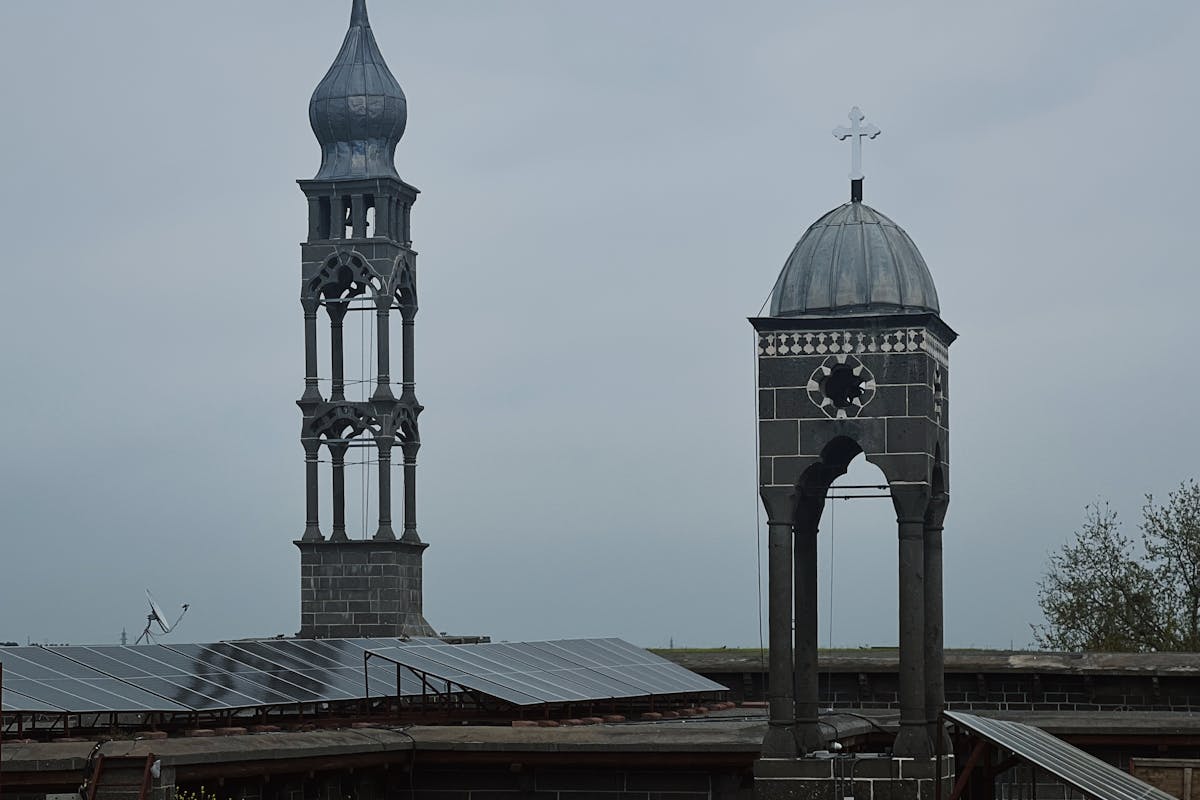
The UK faith school estate
The UK has approximately 7,000 faith schools — around 6,800 Christian (CofE, Catholic, Methodist, other denominations), 36 Jewish, 12 Muslim, plus smaller numbers of Sikh, Hindu, and other faith schools. Most are state-funded primary schools but the estate also includes secondary schools, sixth-form colleges, and independent faith schools.
For solar PV, faith schools differ from secular state schools mainly in their governance and their proximity to a parish church. CofE Voluntary Aided primary schools are typically adjacent to or attached to the CofE parish church; Catholic primary schools are typically adjacent to the Catholic parish church. Combined parish-and-school sites offer particularly strong solar economics.
Funding routes specific to faith schools
- Public Sector Decarbonisation Scheme (PSDS) — Department for Energy Security and Net Zero scheme funding low-carbon retrofits in public-sector buildings including state schools. Typical awards 50-100% of capex. PSDS Phase 4 ran 2024-2025 with several billion pounds nationally; future phases anticipated.
- Salix interest-free loans — Salix Finance provides interest-free loans for energy efficiency works in public-sector buildings including state schools. Typically used alongside PSDS or for projects PSDS doesn't fund fully.
- Department for Education capital schemes — School Condition Allocations and similar capital programmes occasionally fund energy efficiency including solar.
- Diocesan capital programmes — for CofE Voluntary Aided schools, diocesan capital can supplement PSDS for combined parish-and-school projects.
- Methodist Educational Trust capital — for Methodist schools.
- Catholic Educational Service capital — for Catholic schools, often via the diocesan school commission.
- Combined Authority climate funds — many Combined Authorities (GMCA, WMCA, WECA, etc.) include faith schools in their decarbonisation programmes.
The parish-and-school combined site advantage
Many UK CofE and Catholic primary schools share a site with the adjacent parish church. This creates particularly strong solar economics because:
- School weekday daytime demand (8am-4pm typical) matches solar generation peak hours — very high self-consumption
- Parish church + hall provide weekend and evening complementary demand
- Combined funding routes (PSDS for school component + Buildings for Mission for church) typically cover 80-100% of capex
- Single contracting and project management saves overheads vs two separate projects
- Combined system size (typically 40-100 kW) benefits from scale economics
Typical combined parish-and-school project
A typical combined site project:
- System size: 60-80 kW (school + church + hall combined)
- Capex: £55,000-£75,000 turnkey
- PSDS award: £30,000-£45,000 (for the school portion)
- Buildings for Mission: £10,000-£18,000 (for the church/hall portion)
- Diocesan capital: £5,000-£15,000
- Net cost to parish/school: typically £0-£15,000
- Annual saving: £8,000-£14,000 first year
- Payback on net cost: 1-3 years
Eco-Schools integration
Eco-Schools is the global environmental certification scheme for schools, awarded by the Foundation for Environmental Education (FEE) and run in the UK by Keep Britain Tidy. Schools work through Bronze, Silver, Green Flag, and Green Flag with Distinction certifications across nine themes (Energy, Water, Litter, etc.).
Solar PV contributes substantially to the Energy theme. Faith schools often combine Eco-Schools (school-side certification) with Eco Church (parish-side certification) and Eco Diocese (diocesan-level certification) for an integrated environmental commitment story.
Common faith schools solar questions
Do faith schools have specific funding routes?
Yes — Public Sector Decarbonisation Scheme (PSDS) applies to most UK state schools including faith schools. Combined with Salix loans, Department for Education capital schemes, and parish-adjacent funding for shared sites, faith schools can typically achieve 60-100% capex coverage.
What is a Voluntary Controlled or Voluntary Aided school?
CofE Voluntary Controlled (VC) schools are state-funded with CofE religious character but governed by the local authority. Voluntary Aided (VA) schools are state-funded but governed by the diocese with a stronger religious character. Most UK CofE primary schools are VC; Catholic primary schools are typically VA. Both qualify for PSDS funding.
Should we install on the school or the parish church?
Combined sites (school + adjacent parish church) are often the strongest economic case. School daytime demand drives high self-consumption; church evening/weekend use complements. Combined funding stacks (PSDS for school + Buildings for Mission for church) cover most capex.
What about academies and MAT schools?
Multi-Academy Trusts (MATs) typically own multiple schools across a region and can deliver portfolio-scale solar projects. CofE-aligned MATs (e.g. Diocese of Oxford Bishop's Educational Trust, Diocese of Manchester Trinity Multi-Academy Trust) are increasingly active in solar delivery.
How does this fit Eco-Schools?
Eco-Schools is the global environmental certification scheme for schools (separate from A Rocha's Eco Church). Solar PV contributes to the Eco-Schools Energy theme and counts towards Green Flag award certification. Many faith schools combine Eco-Schools and Eco Church credentials.