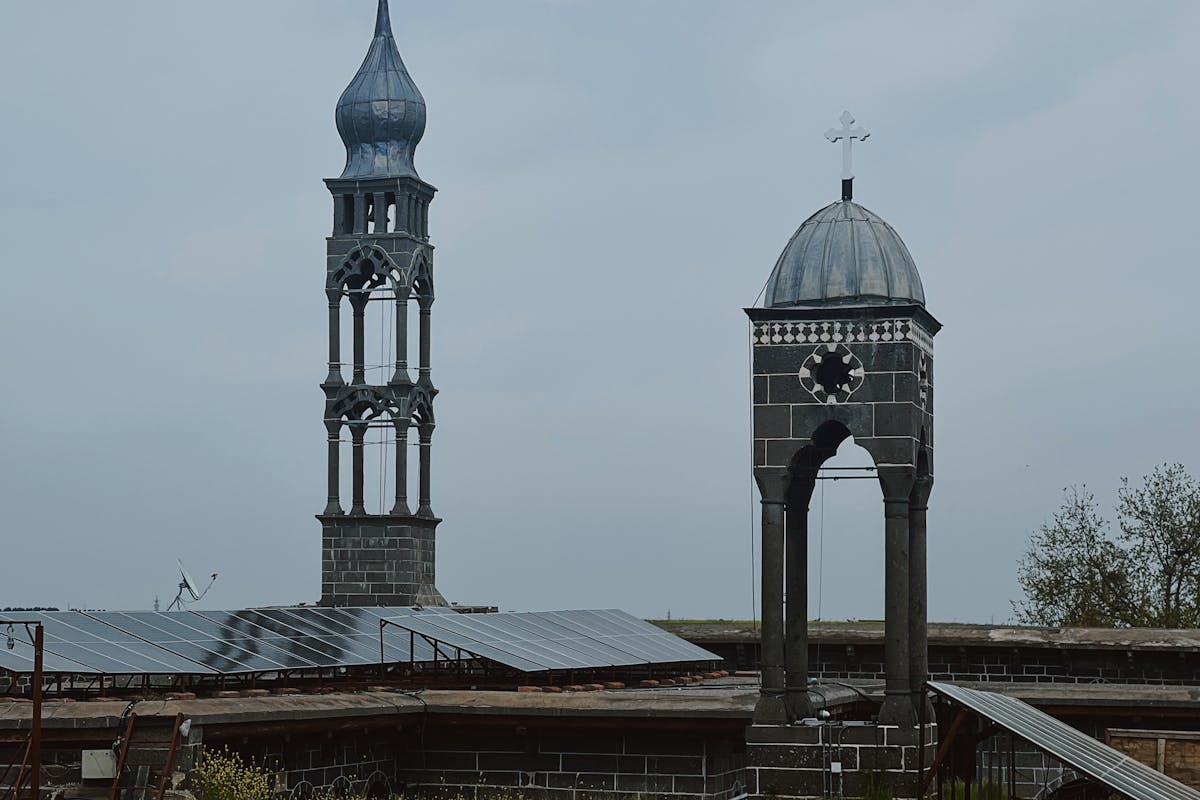
Solar panels for village halls — community buildings that suit solar
England has roughly 10,000 village halls — community-owned buildings that sit at the centre of rural life, hosting everything from playgroups and parish council meetings to wedding receptions, yoga classes, polling stations and the weekly coffee morning. Almost all of them are run as charities, governed by a trust deed and managed day-to-day by a volunteer hall management committee. That charitable, community-mission status — combined with daytime hire use, large simple roofs and a genuine appetite to cut running costs — makes the village hall one of the strongest candidates for solar in the whole community-buildings landscape.
It is worth being clear from the outset: a village hall is not a church hall. A church hall is owned by a Parochial Church Council (PCC) or its denominational equivalent and forms part of a church's estate; a village hall is owned by an independent charitable trust and answers to a hall committee, often working alongside the parish council. The audience, the decision-makers, the funding routes and the consent process are all different. This page is written for hall trustees, management committees and parish councillors weighing up a solar installation on a community building — not for PCC treasurers, who should read our church solar grants guidance instead. If your building is a church hall, the parish funding and faculty routes apply and we cover those separately.
We have delivered and specified solar across community buildings of every kind — Victorian institutes, 1920s memorial halls built after the First World War, post-war prefab-replacement halls, and modern Lottery-funded community centres. The economics are consistently better than they are for the church itself, because a village hall is in use during daylight far more often than a Sunday-only place of worship.
Why village halls are well-suited to solar
Several characteristics line up to make village halls an unusually good fit for photovoltaics:
- Large, simple, accessible roofs. Most village halls are single-storey or two-storey buildings with broad, shallow-pitched or flat roofs and few of the heritage constraints that complicate a medieval church. A typical main-hall roof can comfortably host 20–80 panels without the array being visible from any sensitive viewpoint. Modern, unlisted halls almost never need listed-building consent at all.
- Daytime hire use lifts self-consumption. This is the decisive advantage. A hall that runs a pre-school five mornings a week, hosts daytime clubs and fitness classes, and keeps a fridge, water heater, lighting and heating ticking over is consuming electricity exactly when the panels are generating it. A well-used village hall self-consumes 55–75% of its solar output — versus 25–40% for a Sunday-only church. Higher self-consumption means each kilowatt-hour generated displaces expensive grid import rather than being exported at a low tariff, which is what drives the short payback.
- A genuine community and environmental mission. Hall committees increasingly write sustainability into their objects and their grant bids. Solar is a visible, popular, vote-winning project that the whole village can rally behind — which matters enormously when you are fundraising from that same village.
- Strong charitable grant access. Because the hall is a registered charity (or a charitable trust), it can apply to funders that are closed to commercial businesses — the National Lottery Community Fund, rural community grant programmes, local authority climate funds and parish-council contributions among them. We cover these below.
- Simpler consent. For an unlisted village hall, solar is permitted development or a straightforward planning matter, and the decision rests with the hall trustees plus the local planning authority — there is no faculty jurisdiction, no DAC, no chancellor. That removes the single biggest source of delay that church projects face.
Village hall solar sizing and cost
Village hall systems typically sit in the 8–30 kW range, depending on roof area and electricity demand. A small parish-room hall might take 8–10 kW; a busy community centre with a sprung-floor main hall, committee rooms, a commercial-grade kitchen and an electric heating load can justify 25–30 kW or more. As community buildings — generally modern and unlisted — halls fall into our £900–£1,200 per kW band, below the heritage premium that listed parish churches carry. Generation runs at roughly 900 kWh per kW per year in typical UK conditions.
| System size | Turnkey cost (no grant) | Annual generation | Typical annual saving | Payback (halls alone) |
|---|---|---|---|---|
| 8 kW | £7,200–£9,600 | ~7,200 kWh | £1,400–£1,700 | 5–7 yrs |
| 12 kW | £10,800–£14,400 | ~10,800 kWh | £2,100–£2,500 | 5–7 yrs |
| 20 kW | £18,000–£24,000 | ~18,000 kWh | £3,400–£4,000 | 5–8 yrs |
| 30 kW | £27,000–£36,000 | ~27,000 kWh | £5,000–£6,000 | 5–8 yrs |
Because a well-used hall self-consumes most of what it generates, simple payback without any grant funding is typically 5–8 years — markedly quicker than a Sunday-only church, which sits at 11–14 years on the same logic. Layer in any of the grants below and payback can fall further, sometimes into the 3–5 year range. All panels carry a 25-year product warranty, so a hall is looking at roughly 17–20 years of effectively free generation after payback. For a fuller breakdown of how community-building solar costs are built up — kit, scaffolding, electrical works, scaffolding for two-storey roofs, DNO connection — see our solar panels cost page.
One practical note on sizing: a single-phase supply (common in older halls) limits a grid-tied array to around 13 kW under DNO rules, while a three-phase supply allows larger systems. Where the hall's roof can take more than the supply allows, the answer is usually a battery — which also lets evening hirers and the weekend events draw on stored daytime generation, pushing self-consumption higher still. Where roof area is the limiting factor but the hall sits on a generous plot, a ground-mounted solar array on adjacent land is a viable alternative or supplement.
Funding for village hall solar
The charitable status of a village hall opens funding routes that no commercial building can touch. In practice most halls assemble a package from two or three of the following sources rather than relying on a single grant:
- The National Lottery Community Fund. The largest community funder in the UK. Its grant programmes (including the Awards for All small-grants route, typically up to £20,000, and larger partnership programmes) regularly support energy-efficiency and renewable projects in community buildings where there is a clear community benefit. A solar project that reduces hall hire costs and keeps the building viable for the village is exactly the kind of resilient-community outcome these programmes look for.
- Local council grants and climate funds. Many district, borough and county councils run community grant schemes, UK Shared Prosperity Fund allocations, and dedicated climate or net-zero capital pots that village halls can bid into. These vary enormously by area — your local authority's community grants page and your county's funding portal are the first places to look.
- ACRE and your local Rural Community Council. ACRE (Action with Communities in Rural England) is the national network body for the 38 county-based Rural Community Councils. Your local RCC is the single most useful organisation a hall committee can talk to — they provide a village-halls advice service, model trust deeds, insurance schemes, and crucially a live picture of which grants are open in your county and how to write a competitive bid. They have steered hundreds of halls through capital projects and know the funders personally.
- Parish council support under Section 137. Parish and town councils have a general power (the Section 137 power under the Local Government Act 1972, and broader powers under the General Power of Competence for eligible councils) to spend on projects that benefit their area. A parish council contributing several thousand pounds toward hall solar — and lending its name to the grant bids — is a common and powerful part of the funding stack. Get the project onto a parish council agenda early.
- Charitable trusts and foundations. Bodies such as Benefact Trust and a range of regional and rural-focused foundations fund community-building improvements, and the National Lottery Heritage Fund supports halls of historic interest. A memorial hall or institute of architectural merit may have heritage funding routes a modern hall does not.
- Community fundraising and local giving. Never underestimate the village itself. Halls routinely raise four- and five-figure sums through events, local business sponsorship, and crowdfunding — and that local match makes every grant bid stronger, because funders want to see the community has skin in the game.
A typical funded hall project might combine a National Lottery or council grant covering half the capital, a parish-council Section 137 contribution, and the remainder from hall reserves and local fundraising — bringing the net cost to trustees down to a fraction of the headline figure and the payback to a handful of years.
Community energy models for village halls
Not every hall has the capital, the reserves or the appetite to own a solar system outright — and there are well-established alternatives that let the village benefit from the roof without the committee carrying the upfront cost or the asset risk. These community energy models are increasingly used on community buildings:
- Community ownership via a community energy co-operative. A constituted community energy organisation — usually a Community Benefit Society or co-operative — funds, owns and maintains the array, and the hall hosts it. The hall typically buys the solar electricity at a discounted rate (lower than grid import) and the society earns a modest return from export and from the savings. This removes capital and maintenance responsibility from the hall committee entirely.
- Community share offers. The community energy society raises the installation cost by selling withdrawable community shares to local residents — often in £50 or £100 units. Members typically receive a small annual interest payment, and any surplus funds a community benefit fund that can be spent on local priorities, sometimes including the hall itself. It turns "the hall's solar panels" into "the village's solar panels", which is a remarkably effective way to build local support and ownership.
- Sleeve PPAs and on-site power purchase agreements. Under a Power Purchase Agreement (PPA), a third party (a community society or a commercial developer) installs and owns the array at no upfront cost to the hall, and the hall signs a long-term agreement to buy the generated electricity at an agreed, usually below-grid rate. A "sleeved" arrangement routes that power through the hall's existing supplier contract. The hall gets cheaper, greener electricity and zero capital outlay; the trade-off is that the hall does not own the asset and the savings are smaller than outright ownership over the system's life.
Which model fits depends on the hall's finances, its trustees' appetite for project management, and whether there is an active community energy group in your area. Many counties now have one, and your Rural Community Council or a regional community-energy network can make the introduction. We are happy to design and install under any of these structures — whether the hall owns the system, a community society owns it, or it sits under a PPA — and to liaise with the funding body or co-operative throughout.
Wherever you are in the process — a committee that has just started asking the question, or a parish council with grant funding already lined up — the first step is a feasibility look at your roof, your electricity bills and your hire pattern, so the system is sized to your actual self-consumption rather than to the roof alone. Request a free village hall solar assessment and we will set out realistic sizing, costs, the grants worth pursuing for your specific hall, and the payback you can expect.
Solar panels for community centres and community halls
Village halls are only one part of a much larger building class. Alongside England's roughly 10,000 village halls sit many thousands of urban and suburban community centres, church community centres, sports and social clubs, scout and guide huts, Scout HQs, parish rooms, memorial institutes and Miners' Welfare halls. They share the same DNA: charitable or trust ownership, a volunteer or part-time committee, a mixed timetable of daytime and evening hire, and running costs that a small user-base has to carry. That combination is exactly what makes solar panels for village halls and community buildings work so well — and the case for solar panels for community halls and centres is, if anything, stronger, because busier urban centres burn more electricity during daylight than a rural hall does.
The economics turn on one number: self-consumption. A community building that runs a nursery, a day centre, fitness classes, a café, a food bank and daytime clubs is drawing power at exactly the hours the panels are generating it. A well-used community building self-consumes 55–75% of its solar output, so most of every kilowatt-hour displaces grid electricity bought at 22–27p/kWh rather than being exported at the 8–15p/kWh Smart Export Guarantee (SEG) rate. That is why solar for community centres pays back so much faster than a Sunday-only church. Whether you run a single-room parish room or a multi-hall leisure-scale centre, the question worth asking is the same one that makes solar panels for community centres a rising search: how quickly does the roof pay for itself, and who funds the gap?
How community building solar differs from a village hall
A classic solar village hall project and a community-centre project are close cousins, but the differences change how you size and fund the system:
- Scale and load. A rural village hall is usually a single main hall, a kitchen and a committee room — a modest, spiky electricity demand. A larger community centre may run several bookable rooms simultaneously, a commercial kitchen or café, showers, and sometimes a small gym or all-weather pitch floodlighting. The baseline load is higher and flatter, which lifts self-consumption and supports a bigger array.
- Ownership. Most village halls are independent charitable trusts governed by a hall committee. Community centres are more mixed: some are charities, but many are owned or leased from the local authority, or run by a community association on a council lease. Who owns the roof, and how long the lease has to run, decides whether the building can own the array or needs a landlord's consent and a shared-benefit model instead.
- Mixed and leisure use. Sports and social clubs, leisure centres and community hubs carry heating, hot water, catering and lighting loads that a bare hall does not — closer to a small commercial building than to a church. That pushes them toward the larger end of the sizing table below.
- Consent. An unlisted community centre is almost always permitted development or a straightforward planning matter — none of the faculty jurisdiction a listed church faces. A council-owned building simply adds a landlord's-consent step.
Community centre solar: sizing and cost
Because the building class is broad, so is the sizing range. A solar panel installation for community centres is scoped to the roof area and, more importantly, to the daytime electricity demand — a system sized to the roof alone but far above on-site use exports most of its output at the low SEG rate and pays back slowly. At roughly 900 kWh per kW per year of UK generation, the four building types below cover the great majority of community projects we quote:
| Building type | Typical system size | Turnkey cost | Simple payback |
|---|---|---|---|
| Small village hall / parish room | 8–15 kW | £14,000–£20,000 | 5–8 yrs |
| Medium community centre | 15–30 kW | £22,000–£34,000 | 5–7 yrs |
| Large community / leisure centre | 30–60 kW | £40,000–£70,000 | 4–6 yrs |
| Sports & social club | 10–25 kW | £16,000–£30,000 | 5–8 yrs |
Larger, busier buildings sit at the faster end of the payback range precisely because their higher self-consumption keeps more generation on-site at 22–27p/kWh. Panels carry a 25-year product warranty, so after payback a community building is looking at roughly 17–20 years of effectively free electricity. One practical constraint: a single-phase supply — common in older halls — caps a grid-tied array at around 13 kW under DNO rules, while a three-phase supply (more usual in larger centres) allows the bigger systems. Where roof area or supply limits the array, a battery lets evening hirers and weekend events draw on stored daytime generation and pushes self-consumption higher. For a full component-by-component breakdown of what drives a community-building quote, see our solar panels cost page, and where the roof is unsuitable but the site has spare land, ground-mounted solar is a viable alternative.
Grants and funding for community buildings
The single biggest advantage community buildings hold is that, as charities and community organisations, they can reach funding pots closed to commercial businesses. Interest in solar panel grants for village halls and community centres has risen sharply, and most funded projects assemble a package from two or three of these routes rather than relying on one:
- The National Lottery Community Fund. The UK's largest community funder. Its Awards for All small-grants route (typically up to £20,000) and larger partnership programmes regularly back energy and resilience projects where there is clear community benefit — cutting hire costs to keep a building open is exactly that.
- Local authority climate and community grants. Many district, borough and county councils run community grant schemes, UK Shared Prosperity Fund allocations and dedicated net-zero capital pots that halls and centres can bid into. These vary by area — your council's community-grants page and your county funding portal are the first places to look.
- ACRE and your Rural Community Council. ACRE (Action with Communities in Rural England) is the network body for the 38 county-based Rural Community Councils. Your local RCC runs a village-halls advice service, holds model trust deeds, and — most usefully — has a live picture of which grants are open in your county and how to write a competitive bid.
- Parish and town council Section 137. Parish and town councils can spend on projects that benefit their area under the Section 137 power (Local Government Act 1972), or the General Power of Competence where eligible. A council contribution of a few thousand pounds — and its name on the bid — is a common, powerful part of the stack. Get onto a council agenda early.
- The Community Ownership Fund. Aimed at community groups taking on or safeguarding valued local assets — halls, clubs, sports grounds and community hubs — which can include the capital works that keep them viable.
- Community energy co-ops and share offers. A constituted community energy society can fund the array through a community share offer, spreading ownership across local residents (more on this below).
- Sport England (for sports clubs). Sports and social clubs can look to Sport England and the relevant national governing body's facility funding for energy and clubhouse improvements that a purely commercial owner could not access.
PCC treasurers should note that church-owned halls follow the parish and diocesan routes instead — our church solar grants guidance covers those separately.
Community ownership and shared-benefit models
Not every committee has the reserves or appetite to own a system outright, and several well-established models let the community benefit from the roof without the capital risk — keeping the asset, and its value, local:
- Community share offers. A community energy society raises the installation cost by selling withdrawable community shares to local residents, often in £50 or £100 units. Members receive a small annual interest payment, and any surplus funds a community benefit pot. It turns "the centre's solar panels" into "the neighbourhood's solar panels" — a remarkably effective way to build local support.
- Community Benefit Societies. A constituted benefit society funds, owns and maintains the array while the building hosts it, buying the solar electricity at a discounted rate below grid import. Capital and maintenance responsibility sit with the society, not the volunteer committee.
- Sleeve and on-site PPAs. Under a Power Purchase Agreement, a community society or developer installs and owns the array at no upfront cost, and the building signs a long-term agreement to buy the generated electricity at an agreed, below-grid rate. Zero capital outlay; the trade-off is that the building does not own the asset and lifetime savings are smaller than outright ownership.
- Split-benefit arrangements. Where a building is council-owned or leased, a split-benefit structure shares the savings between landlord and occupier so both have a reason to back the project — the usual way to unlock a leased community centre roof.
How to start a community building solar project
A community solar project moves fastest when the committee works through it in order rather than jumping to quotes. The proven sequence is short:
- Pull your baseline bills. Gather 12–24 months of electricity bills or half-hourly meter data, your current tariff and annual kWh. Every funder wants this, and it is what sizes the system to your real demand.
- Check the roof and orientation. Confirm roof area, pitch, orientation and condition, and whether the supply is single- or three-phase — this sets the ceiling on system size.
- Pass a committee resolution. Get the project formally minuted, confirm who owns or leases the building, and secure landlord's consent early if the freehold is council-held.
- Get a free feasibility assessment. A proper feasibility look sizes the array to your self-consumption, models generation at ~900 kWh/kW/yr, and gives you the MCS-backed figures grant assessors ask for.
- Submit funding applications in parallel. Run the grant bids alongside — not after — the technical work, since a conditional grant offer strengthens every other application in the stack.
For a plain-English walkthrough written for committees, see our community halls guide. When you are ready, request a free community building solar assessment and we will set out realistic sizing, costs, the grants worth pursuing for your specific building, and the payback you can expect.
Planning, grid connection and charity approvals for village hall solar
Three approvals decide whether a village hall solar project can go ahead, and none of them is about the panels themselves: whether the roof needs planning permission, how the array connects to the electricity network, and — if the hall is a charity and someone else will own the panels — whether the trustees are allowed to lease the roof. Check all three before you commit to a design or a funding bid.
Planning permission: the non-domestic rules, not the householder ones
A village hall is not a house, so the familiar householder limits do not apply. In England, solar on a non-domestic building is covered by Class J of Part 14 of the General Permitted Development Order 2015. Roof panels on a hall are permitted development unless one of these applies:
- on a pitched roof, the panels would stand more than 0.2 metres proud of the roof slope;
- on a flat roof, the highest part of the equipment would be more than 1 metre above the highest part of the roof;
- the panels would sit within 1 metre of the external edge of the roof;
- the hall is a listed building, or stands within the curtilage of one, or sits on a scheduled monument.
Wall-mounted panels have their own limits, and in a conservation area they are not permitted on a wall that fronts a highway. Permitted development also carries a condition that the equipment is sited, so far as practicable, to minimise its effect on the building's appearance and the amenity of the area. On a small hall roof the 1 metre edge rule matters, because it can remove more usable area than you expect. Larger roof arrays that are not classed as microgeneration (Class J(c)) also need a prior approval application to the council before work starts, covering design and external appearance. If your hall is listed, none of this applies and you will need consent — see our guide to solar panels on listed buildings.
Grid connection: G98 or G99
Your electricity network operator must be told about any array. The simpler route, G98, covers installations of up to 16 A — 3.68 kW — per phase. Anything larger needs a G99 application to the network operator before the work is done, and the operator may attach conditions to the connection. Ask your installer to confirm which route your design falls under at quotation stage, because a G99 application can add significant time to the programme and should be built into any grant timetable.
If the hall is a charity: leasing the roof to a community energy group
Many community energy models work by a separate society owning the panels and leasing the hall roof. If the hall is held by or in trust for a charity in England or Wales, that lease is a disposition of charity land, and section 117 of the Charities Act 2011 says it cannot happen without an order of the court or the Charity Commission — unless the trustees follow the statutory route instead.
That route has two conditions. First, the society taking the lease must not be a connected person. Second, the trustees must take the right advice before they agree terms:
- for a lease of more than seven years, a written report from a designated adviser — a fellow or professional associate of the Royal Institution of Chartered Surveyors with experience of that kind of property in that area (section 119);
- for a lease of seven years or less, advice from someone the trustees reasonably believe has the ability and practical experience to give it (section 120);
- in both cases, the trustees must then decide the terms are the best that can reasonably be obtained for the charity.
The trap for village halls is the connected-person rule. Under section 118 a connected person includes a charity trustee, their close family, the charity's officers and employees, and any company or institution those people control or have a substantial interest in. Hall committees and local energy groups can share members. If your trustees run or control the society that would lease the roof, it is likely to be a connected person, the statutory route is not available, and you will need an order from the Charity Commission. Find this out before you draft heads of terms, not after. The full trustee sequence for a roof lease puts the connected-person check first, because it is the only condition that can close the statutory route altogether.
Export income
Power the hall does not use can be sold under the Smart Export Guarantee, which covers solar installations of up to 5 MW in Great Britain. There is no single rate: each licensed supplier sets its own tariff, contract length and terms, and must pay above zero, so compare offers rather than accepting the supplier you buy electricity from. A unit the hall uses itself is usually worth more than a unit it exports, so size the array around daytime use rather than export.
This is general information, not legal advice. For a roof lease, take advice from a solicitor or the Charity Commission before trustees agree terms.
Village hall solar — common questions
Are solar panels worth it for a village hall?
Yes, for most well-used village halls. Daytime and evening community use (toddler groups, fitness classes, lettings, parish council meetings, polling) gives good self-consumption — typically 55–75% — so a village hall solar system commonly pays back in 5–8 years and then delivers decades of cheap electricity to a charitable community asset.
How much do solar panels cost for a village hall?
Village halls typically install 8–30 kW. A 15 kW system is around £14,000–£20,000 turnkey; a 25 kW system £22,000–£30,000. Most halls are charitable trusts and can access grant funding that brings the net cost down substantially.
What grants are available for village hall solar?
National Lottery Community Fund, local council climate and community grants, ACRE / rural community council support, parish council funding (Section 137 powers), community energy co-ops and community share offers. Many village halls fund solar with little or no money from reserves.
Can a village hall run a community energy scheme?
Yes. Community ownership models — community share offers, sleeve PPAs and benefit-society structures — let local residents invest in the hall’s solar, share the savings, and keep the asset in community hands. It is one of the strongest community-engagement projects a hall committee can run.