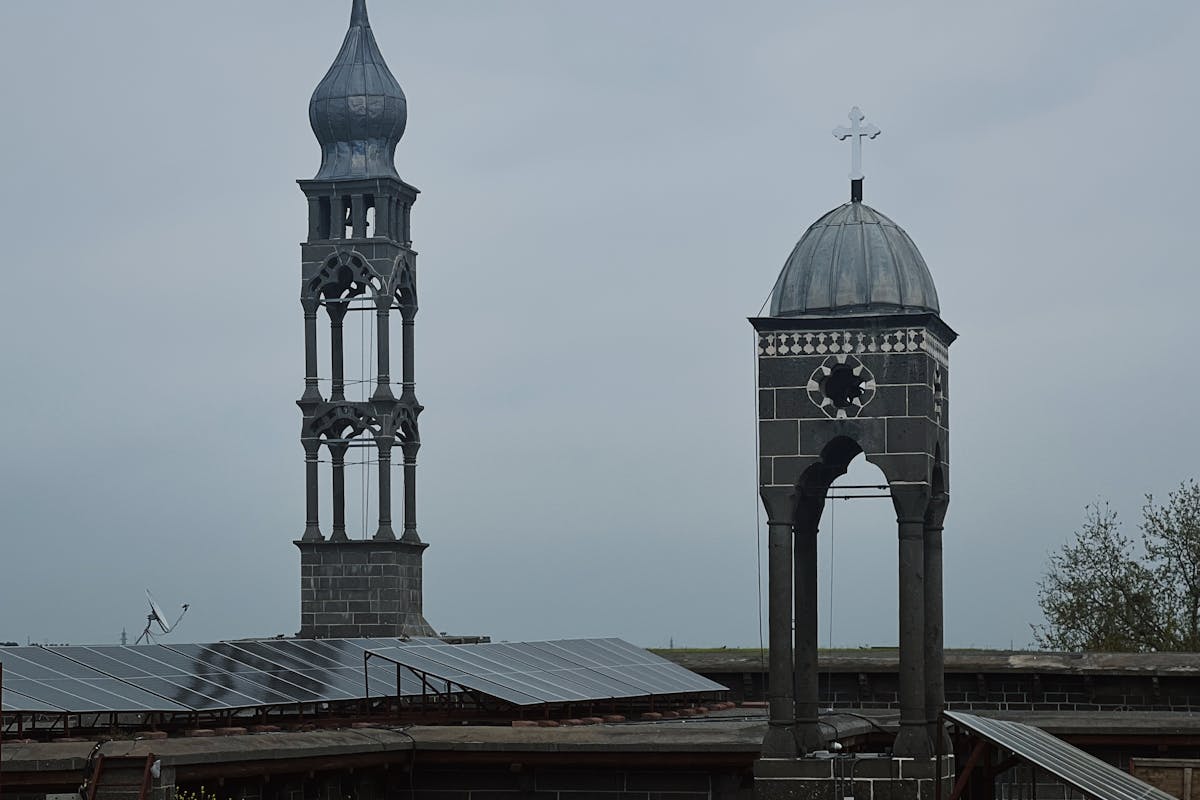
Solar panels for UK Methodist churches — the specialist view
There are around 4,500 Methodist churches across Great Britain, organised into local churches, circuits and districts — a connexional structure unlike anything in the Anglican or Catholic world. A single circuit may hold a dozen chapels of wildly different ages: a stone hilltop chapel from 1840, a red-brick Victorian town church, and two or three modern post-war buildings thrown up to serve new estates in the 1950s and 1960s. That estate mix matters enormously for solar, because a large slice of the Methodist stock is modern, unlisted, shallow-pitched and structurally straightforward — exactly the kind of roof that delivers the best solar economics in the whole church sector.
The decisive difference for solar projects, though, is governance. Methodist buildings are held under Methodist Trust Property arrangements, with the managing trustees of each local church (and the circuit) responsible for the building. Crucially, there is no faculty jurisdiction. A Methodist church does not need a Diocesan Advisory Committee, a Statement of Significance, a public petition window, or a Chancellor's grant. It needs trustee approval plus ordinary civil planning (and Listed Building Consent only where the building is actually listed). In practice this strips months out of the consent process compared with a Church of England parish church. For a modern unlisted chapel, the consent pathway can be as short as a single managing-trustees meeting, a permitted-development check, and — where required — a straightforward planning application. This page sets out exactly how Methodist solar works in 2026: sizing, cost, the Net Zero programme, funding, and a realistic timeline.
The Methodist Church Net Zero 2030 programme
The Methodist Conference adopted a target of net zero by 2030 in 2021 — one of the most ambitious timelines of any UK denomination, two decades ahead of the wider UK statutory target and aligned to the Conference's Action for Hope climate-justice framework. That ambition is backed by real money and real delivery support, channelled through the connexional Net Zero programme, district environmental officers, and the property and consents teams who help churches navigate the trust and planning steps.
For solar projects specifically, the programme is one of the more generous and accessible church funding routes in the country. Award rates are strong, and they are strongest for buildings with genuine weekday community use — chapels running food banks, parent-and-toddler groups, debt advice, warm spaces, lunch clubs and lettings. The logic is straightforward: a building used six or seven days a week consumes the solar it generates, cuts more carbon per pound granted, and demonstrates the mission case the Conference wants to fund. A Sunday-only chapel can still be funded, but a community hub will typically be prioritised and funded at a higher percentage.
The programme also reflects the connexional structure: applications are usually developed by the local church but routed through the circuit and district, which means the people assessing your project understand Methodist buildings, Methodist budgets and Methodist trust law. For comparison with how consent works in other independent traditions, see our page on free churches, which share the trustee-led model.
Methodist church solar sizing and cost
Methodist solar installations sit overwhelmingly in the 10–50 kW range. The lower end suits small single-chapel sites; the upper end suits town-centre churches with large halls, or circuit projects bundling several roofs. Because so much of the Methodist estate is modern, post-war and unlisted, the per-kW cost is often at the cheaper end of the church spectrum — these are typically pitched concrete-tile or shallow trussed roofs that take standard mounting, not heritage stone slate over medieval oak.
| System size | Building type | Typical cost (turnkey) | Annual generation | Indicative saving/yr |
|---|---|---|---|---|
| 10 kW | Modern unlisted chapel | £9,000–£12,000 | ~9,000 kWh | ~£2,000 |
| 15 kW | Town church + hall | £14,000–£18,000 | ~13,500 kWh | ~£3,000 |
| 25 kW | Larger church with community use | £22,000–£30,000 | ~22,500 kWh | ~£5,000 |
| 50 kW | Large/circuit-bundled site | £42,000–£55,000 | ~45,000 kWh | ~£9,500 |
Per-kW pricing follows the wider sector: modern unlisted halls and chapels run £900–£1,200/kW, while any listed or heritage Methodist building (the stone hilltop chapels and grander Victorian town churches) carries the heritage premium of £1,100–£1,400/kW for reversible, conservation-grade fixings. A typical 15 kW system generates around 13,500 kWh a year and saves roughly £3,000 annually before any grant, on the UK norm of ~900 kWh per kW installed.
The standout advantage of Methodist buildings is self-consumption. A Sunday-only church self-consumes only 25–40% of what it generates, exporting the rest at a low tariff. But a Methodist church running weekday community activity — the food bank on Tuesday, the toddler group on Wednesday, the warm space and lettings through the week — typically self-consumes 60–75% of its solar. Every kilowatt-hour used on site is worth three to four times an exported one, so that weekday community profile is the single biggest lever on payback. For a fuller cost breakdown by system size and building type, see our church solar panels cost guide.
Funding for Methodist church solar
Methodist churches have one of the richest funding stacks of any tradition, precisely because the trust and connexional structure pools resources. The routes that matter most in 2026:
- Methodist Net Zero programme — the flagship route. On strong applications, particularly community-use buildings, it can cover a substantial share of capex; we routinely see funded projects landing at 60–80% of cost from the programme on the best-evidenced schemes.
- Circuit and district reserves — uniquely Methodist. Circuits often hold property reserves from the sale of closed chapels, and a circuit can choose to part-fund or fully fund solar on a member church as a connexional capital decision. This is frequently the difference between a project stalling and going ahead.
- Listed Places of Worship VAT Grant Scheme — for the listed minority of Methodist buildings, this scheme reimburses the 20% VAT on eligible works to the listed fabric, an effective discount on the whole install. It is a current, open route — claim it on any listed chapel.
- Benefact Trust (formerly Allchurches) — open to all Christian denominations, awarding grants of up to £36,000 for church projects including energy and net zero works. A common top-up alongside the Net Zero programme.
- National Lottery Heritage Fund — relevant where solar forms part of a wider conservation or community-heritage scheme on an older chapel.
Stacked together, a typical community-use Methodist church can end up meeting only a modest fraction of headline capex from its own funds. We have seen Net Zero programme funding plus a circuit contribution plus a Benefact top-up reduce a chapel's net outlay to four figures on a £20,000-plus system. For the full menu of schemes and current award figures across all church types, see our church solar grants page.
The payback maths reflects this. A Sunday-only Methodist church with no grant pays back in 11–14 years — the same as any low-utilisation church. But with grant funding and a connected hall absorbing weekday demand, payback compresses to 6–9 years, and a standalone modern hall can pay back in 5–8 years. Against a 25-year panel warranty, even the slowest case delivers more than a decade of effectively free generation. The hall is so often the best place to start that we cover it in detail on our church halls page.
A typical Methodist install timeline
This is where the Methodist advantage is clearest. Without faculty jurisdiction, the consent path for a modern unlisted chapel is dramatically shorter than for an equivalent Anglican parish church — months, not the best part of a year. A representative timeline for an unlisted modern Methodist building, start to commissioning:
| Stage | What happens | Typical duration |
|---|---|---|
| 1. Feasibility & survey | Roof survey, generation and self-consumption modelling, indicative quote | 2–3 weeks |
| 2. Trustee approval | Managing-trustees resolution; circuit/district notified per trust rules | 2–6 weeks |
| 3. Net Zero funding application | Application via circuit/district to the connexional programme (+ any Benefact top-up) | 4–10 weeks |
| 4. Planning / permitted development | PD check or a straightforward civil planning application; no faculty | 0–8 weeks |
| 5. DNO & installation | G98/G99 connection approval, install, commissioning, MCS certification | 2–4 weeks |
Because several of these stages overlap — funding can be progressed while the planning check runs, and the DNO application can be lodged early — a modern unlisted Methodist church can realistically go from first conversation to a commissioned, generating system in under five months. Listed Methodist buildings take longer, because Listed Building Consent (and Historic England consultation for any Grade I or II* chapel) is layered on top, pushing the timeline closer to the parish-church range. But for the large, modern, community-busy core of the Methodist estate, solar is one of the fastest and most cost-effective net zero interventions available — and with the Conference's 2030 target driving funding and momentum, there has rarely been a better moment for a Methodist church to act. Start with a no-obligation feasibility assessment via our quote form and we will model your roof, your self-consumption and your funding stack before you commit to anything.
Methodist church solar — common questions
Do Methodist churches need a faculty for solar panels?
No. Methodist churches have no equivalent to the Church of England faculty system. Solar installations are approved by the Church Council / trustees (with Methodist Trust Property holding the building) plus civil planning — Permitted Development for most unlisted buildings, or Listed Building Consent for listed chapels. This makes Methodist projects faster than CofE: often under five months for a modern unlisted building.
What is the Methodist Church Net Zero 2030 programme?
The Methodist Conference adopted a net zero by 2030 target in 2021. The Net Zero Carbon programme provides grant funding for parish solar, heat pump and insulation projects, approved-supplier panels, annual carbon reporting per circuit and district, and the Action for Hope framework. Award rates for solar have been strong, especially for buildings with active community use.
How much do solar panels cost for a Methodist church?
Methodist churches typically install 10–50 kW systems. Modern post-war Methodist buildings are well suited to PV (large rectangular roofs, lower per-kW cost). A 25 kW system is roughly £24,000–£31,000 (unlisted) or £27,000–£36,000 (listed). The Net Zero programme has covered 60–80% of capex on some projects, with circuit reserves and local fundraising covering the rest.
Why do Methodist churches get good solar economics?
Self-consumption is generally higher than Sunday-only Anglican churches because of stronger weekday community use — food banks, drop-ins, mums-and-tots, uniformed organisations and lettings. Methodist circuits with active community programmes frequently achieve 60–75% self-consumption, comparable to a small commercial property, which shortens payback.