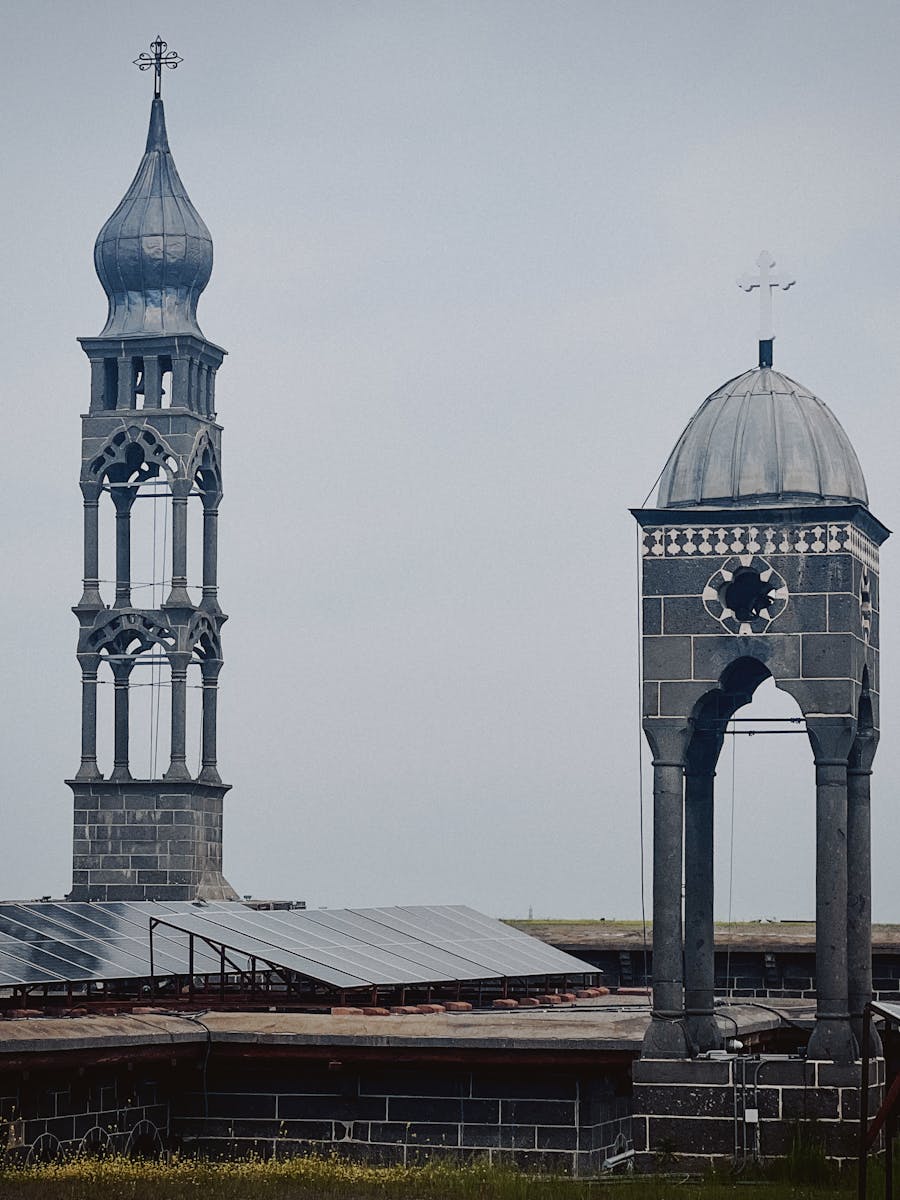
Part of our wider work on solar panels for religious buildings across every UK faith tradition.
The UK mosque estate
The UK has approximately 1,800 mosques and Islamic centres serving around 4 million Muslims (the second-largest religious community after Christians). Geographically concentrated in London, Birmingham, Manchester, Bradford, Leicester, Leeds, Glasgow, and the wider West Midlands and Yorkshire regions, with substantial Muslim populations in most major UK cities.
UK mosques range from purpose-built modern buildings to converted churches, chapels and warehouses, down to small community-centre mosques — and the building type matters more than the label, because a converted warehouse and a listed former chapel take different consent routes. Some UK mosques are listed; check yours on the National Heritage List for England, or the equivalent register in Scotland, Wales or Northern Ireland, rather than assuming. Listing no longer changes the VAT position: since 1 February 2024 the installation is zero-rated in a building used solely for a relevant charitable purpose, listed or not, until 31 March 2027. The Listed Places of Worship VAT scheme closed on 31 March 2026.
Theological framework
Islamic stewardship theology (the concept of khalifa — humans as trustees of creation) provides strong theological grounding for environmental works in mosques. Surah Ar-Rum (30:41) and other Qur'anic passages explicitly condemn environmental destruction. The Eco-Islam framework, articulated by figures such as Sheikh Hamza Yusuf and the Cambridge Muslim College, has spread the case for mosque-level environmental engagement.
For mosque committees considering solar, the theological framing of khalifa and the wider Islamic environmental tradition provide a strong basis for community engagement and fundraising. We've worked with several UK mosques where the imam's khutba on environmental stewardship preceded the capital campaign for the solar project.
Halal finance options
Conventional bank loans (with interest) are haram (forbidden) under Islamic finance principles. UK Islamic banks offer Sharia-compliant alternatives:
- Ijara (Islamic lease) — the bank purchases the solar system and leases it to the mosque; ownership transfers at end of term. No interest involved.
- Murabaha (cost-plus) — the bank purchases the system and sells it to the mosque at an agreed mark-up, paid in instalments. No interest involved.
- Sukuk (Islamic bonds) — for large mosque projects, sukuk structures can fund the capital expense through Sharia-compliant bond-like instruments.
UK providers we can introduce: Al Rayan Bank, Gatehouse Bank, Bank of London and the Middle East. All are FCA-regulated and operate under Sharia supervisory board oversight.
Funding routes for UK mosques
- 0% VAT on the installation — energy-saving materials relief for buildings used solely for a relevant charitable purpose, until 31 March 2027 (then 5%). The DCMS Listed Places of Worship VAT scheme closed on 31 March 2026
- Halal asset finance — ijara or murabaha through UK Islamic banks
- Mosque committee reserves — most established UK mosques have substantial reserves built from Friday collection (jumma sadaqat)
- Community fundraising — Ramadan campaigns are particularly effective for capital projects
- Zakat funds — restricted to certain categories; solar typically doesn't qualify directly but adjacent community-benefit projects sometimes do
- Islamic Relief, Penny Appeal, Muslim Hands — major UK Islamic charities occasionally support mosque capital works
- Local authority climate emergency funds — accessible to UK mosques as community buildings
Friday prayer scheduling
The principal scheduling consideration is the Friday Jumma prayer (12:30-2:30 PM typical). We schedule installation work to avoid this window. Daily prayers (5x daily, with adhan/azan calls) are typically short and don't substantially disrupt installation work. For Ramadan (when mosques are at peak use during evening Taraweeh prayers and pre-dawn Suhoor) we typically pause installation work or schedule for early morning hours.
Common mosque solar questions
Does the Listed Places of Worship VAT scheme apply to mosques?
Not any more — and for solar you should not need it. The DCMS scheme covered listed places of worship of all faiths, but it closed to new applications at 23:59 on 31 March 2026, its budget was fully allocated and the government confirmed there would be no further rounds. In England it is replaced by the Places of Worship Renewal Fund, a £92m four-year Historic England programme for repair and maintenance whose opening date and scope for energy measures were unpublished as at September 2026. The more useful point: installing solar is an installation of energy-saving materials, zero-rated for VAT in a building used solely for a relevant charitable purpose until 31 March 2027. A mosque charity in that position pays no VAT on the install, so there is no 20% to reclaim.
Is solar PV halal?
Yes — generating electricity from sunlight is widely considered halal across all major Islamic schools of jurisprudence. Solar is essentially a passive harvesting of natural energy, with no involvement in haram industries or riba (interest-based finance).
Are there halal-finance options for solar?
Yes — several UK Islamic banks (Al Rayan, Gatehouse, Bank of London and the Middle East) offer asset-finance products structured as ijara (lease) or murabaha (cost-plus) rather than interest-based loans. We can introduce these options for mosques requiring halal financing.
Does the mosque committee need specific approvals?
Governance varies by mosque tradition. Most UK mosques operate through a charitable trust with elected committee. Substantial capital works typically need committee resolution and (for larger projects) wider congregational consultation. No faculty-equivalent system applies.
How does Friday prayer affect installation timing?
We schedule install work to avoid the Friday Jumma prayer period (typically 12:30-2:30 PM). Most installation work happens during weekday daylight hours when the mosque is at lower occupancy. For Ramadan and major festivals we adjust timing accordingly.